
An indoor pool creates a demanding microclimate. Evaporation from the water surface generates a continuous humidity load that varies with the temperature, the use, the water surface area and the ambient conditions of the space.
➜ If that humidity is not managed it can affect the building, corrode equipment and make the space uncomfortable.
This is why the design of the dehumidification and ventilation of an indoor pool deserves attention from the earliest phases.
It is also a subject that is sometimes misunderstood, as it is often reduced to “buying a dehumidifier”, when in reality it is a question of integrated design, coordinated with the architecture and with the pool itself.
That coordination is essential within our technical pool consultancy service.
Below we explain how the ventilation and dehumidification of an indoor pool work together, the factors that define a good design and why they should never be addressed in isolation. We invite you to read on.
Why does an indoor pool need climate control?
An indoor pool generates a humidity load far higher than that of a conventional interior space.
Evaporation depends on factors such as the surface area and temperature of the water, the temperature and humidity of the air, the activity of the users and the characteristics of the water features.
If that humidity is not properly managed, the relative humidity can reach levels that are inadequate for comfort, air quality and the preservation of the building.
If action is not taken in time, the consequences eventually become visible. That excess vapour turns into condensed water that settles on glazing, walls and ceilings.
Over time, this build-up can favour the appearance of mould, the corrosion of metal elements and the deterioration of materials and finishes.
Environmental control also has an energy dimension. Maintaining appropriate temperature and humidity conditions makes it possible to limit evaporation and optimise the dehumidification, ventilation and water-heating requirements.
For all these reasons, a well-planned climate-control system helps protect three important aspects at once:
-
- The comfort of those enjoying the space.
-
- The long-term preservation of the building.
-
- The efficient consumption of the installation.
It is a technical requirement that should be integrated into the architecture itself.
Dehumidification: removing the moisture
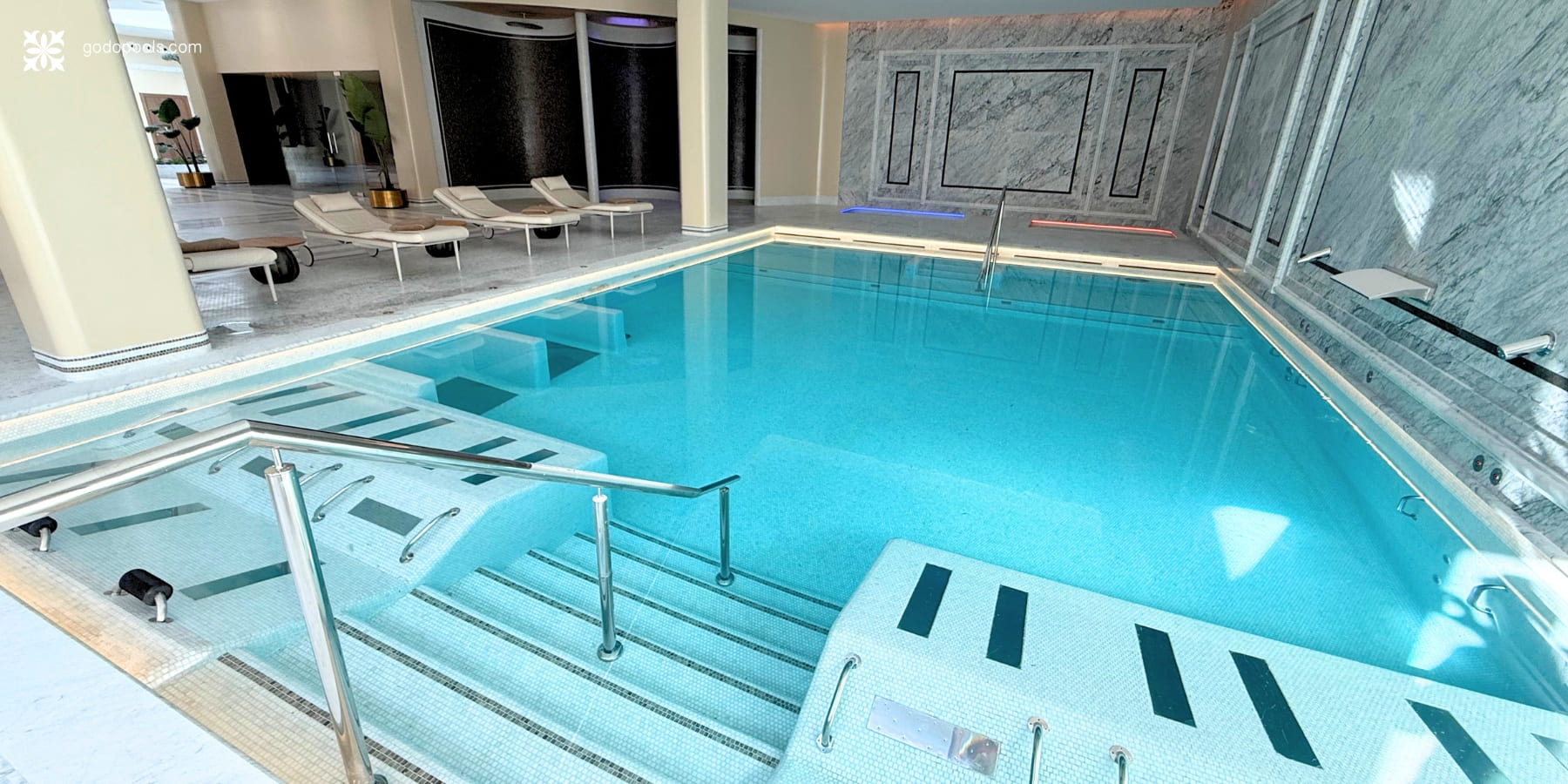
Dehumidification is an essential part of the wellness system.
Its function is to control the humidity load of the space in order to maintain the ambient conditions defined in the project and limit the risk of condensation, keeping the relative humidity within the design conditions appropriate for comfort, air quality and the protection of the building.
There are different strategies and technologies for controlling humidity. Among them are mechanical dehumidification systems, which can condense the vapour in the air in order to remove it from the space and recover part of the energy in the process.
These systems are often integrated into multifunction units that can combine dehumidification, ventilation, energy recovery and air climate control and, depending on the solution adopted, also contribute to heating the water.
For the system to be truly effective, the equipment should be sized to measure, calculating the actual volume of humidity that particular space will produce, rather than choosing a standard model.
To size the system, factors to evaluate include the surface area and temperature of the water, the temperature and humidity conditions of the space, the anticipated occupancy and level of activity, the wet surfaces and the presence of spas, waterfalls or other features that increase evaporation.
Likewise, the location of the equipment and its integration with the rest of the building should be planned in advance, an aspect we address in our guide to the plant room.
Ultimately, the performance of a dehumidifier depends largely on the technical project designed around it.
Ventilation: fresh air and air quality
Dehumidification alone is not enough. The ventilation of the indoor pool supplies the necessary flow of outdoor air and extracts air from the space to help control humidity and indoor air quality.
A good pool ventilation system introduces the outdoor air needed to maintain indoor air quality and evacuate humidity and contaminants.
Furthermore, when the solution incorporates energy recovery, it can take advantage of the energy contained in the extracted air.
➜ This is why the design of the ventilation and the dehumidification of an indoor pool must form part of a single environmental-control strategy.
Addressing either in isolation tends to produce a space that is humid, inefficient or both.
Air distribution within the space
Controlling how much air is introduced or extracted is not enough. Its distribution within the space is equally important.
The system must avoid stagnant zones, control stratification and direct the air appropriately towards glazing and other surfaces prone to condensation.
The position of supply, return and extraction points should be studied in relation to the geometry of the space, the water surface and the architecture, to maintain homogeneous ambient conditions and good air quality.
The factors a good design coordinates
Effective humidity control in an indoor pool brings together several factors, each of which influences the others. The table summarises the main ones:
| System / factor | Function in the indoor pool |
| Dehumidification | Controls the humidity load of the space to maintain the design conditions and limit condensation. |
| Ventilation | Supplies outdoor air and extracts air from the space to help control air quality, humidity and contaminants. |
| Temperature control | The relationship between air and water temperature directly influences evaporation, comfort and the risk of condensation. |
| Room pressure | Keeping a controlled pressure, generally slightly negative relative to adjacent spaces, helps limit the migration of humidity and contaminants to other areas of the building. |
| Heat recovery | When the system includes it, it reuses part of the energy in the extracted air to temper the incoming air and reduce energy consumption. |
| Water treatment | The quality and treatment of the water influence the formation and release of certain contaminants to the air, so they must be coordinated with the ventilation and air-quality strategy. |
Air, water and the building as one system
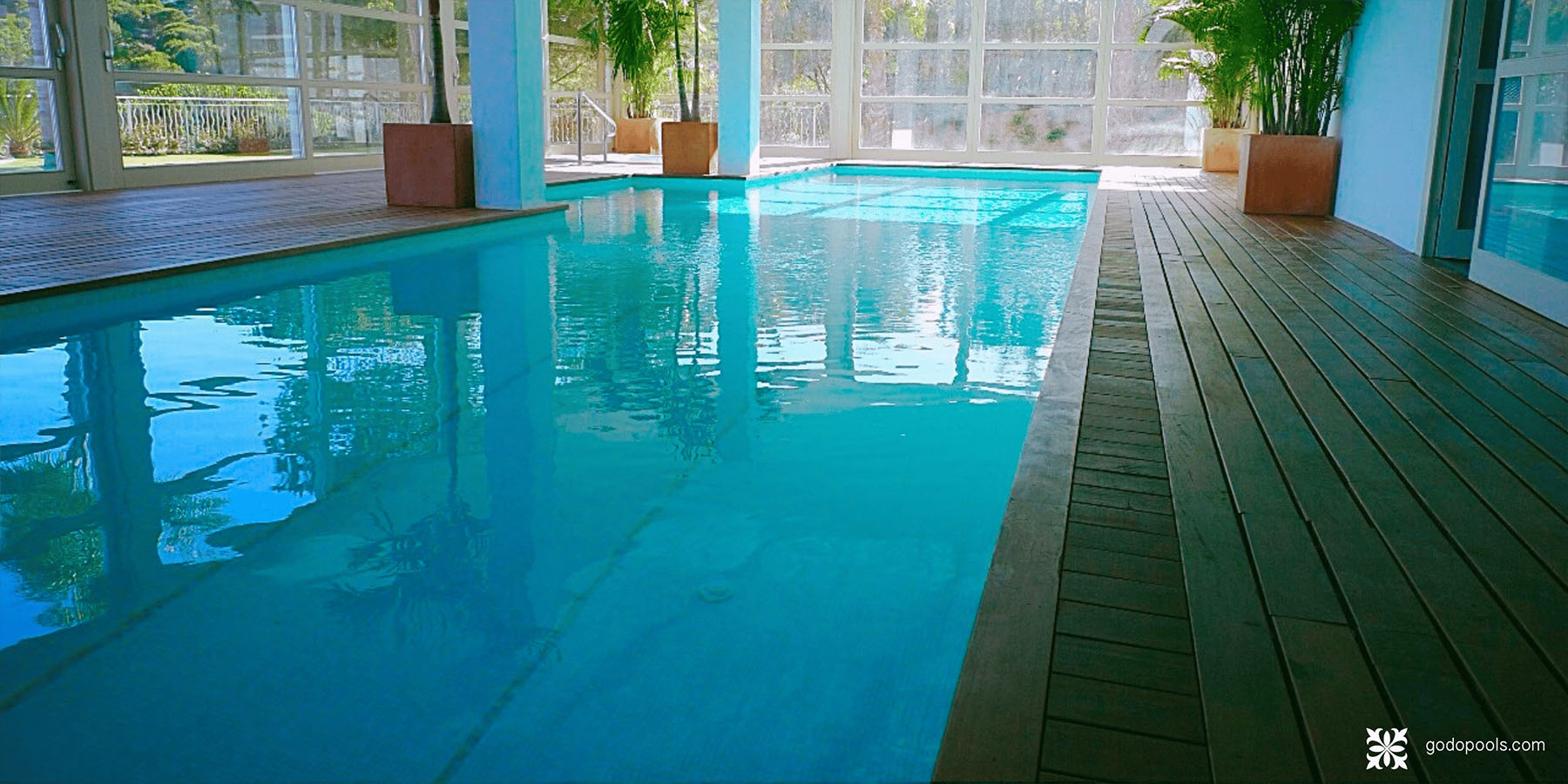
One of the most important ideas in the dehumidification of an indoor pool is that air quality and water treatment are closely linked.
➜ The quality of the water directly influences the quality of the air.
A correct treatment strategy helps control the formation of chloramines and other by-products, while well-designed ventilation helps prevent their accumulation in the space.
The building envelope plays a fundamental role in this process. The insulation of the walls, the quality of the glazing and the thermal behaviour of the structure largely determine how easily the indoor climate can be controlled.
For example, a correctly designed envelope helps keep the interior surfaces above the dew point and reduce the risk of condensation.
All these decisions should be coordinated with the architecture from the first phase of the project.
➜ This early planning is what makes the difference in our Architecture of Water work and in the integration of pools and spas within hotel projects.
At GodoPools we integrate these requirements within the technical development of the project, coordinating dehumidification, ventilation, temperature and water treatment with the architecture, rather than adding a climate unit to the indoor pool once the building is already defined.
Why it belongs in the earliest design phases
Defining the climate-control strategy of an indoor pool at an advanced stage can limit the solutions available.
Once the building is defined, the options for ducting, air treatment and a ventilation strategy for the space are constrained by decisions already taken.
Considered early, the dehumidification and ventilation become part of the architecture rather than a correction to it.
This is precisely the kind of coordination a technical partner like GodoPools provides: integrating the climate systems with the pool, the plant room and the building so operational needs do not appear as late constraints during construction. 
Conclusion
The design of the dehumidification and ventilation of an indoor pool is not about a single machine.
It is about coordinating humidity, air quality, temperature, room pressure, energy efficiency and water treatment within a single technical strategy, integrated with the building from the earliest phases.
At GodoPools we develop and validate Architecture of Water solutions from a hydraulic, constructive and design perspective, also integrating the climate control, ventilation and dehumidification each project needs.
Whether you are developing a private residence, a hotel, a resort or a high-end wellness space, our team can help you define and integrate the climate-control, ventilation and dehumidification strategy of the indoor pool within the architectural and technical project from its earliest phases. Contact us here.
Frequently asked questions (FAQ)
➜ What humidity level should an indoor pool have?
As a technical reference, indoor pools usually work around 50-60% relative humidity, although the design value should be defined according to the use of the pool, the air and water temperatures, the characteristics of the envelope and the specific conditions of the project.
➜ Is a dehumidifier enough for an indoor pool?
Not on its own. A pool dehumidifier manages humidity, but it has to work together with the ventilation of the indoor pool, temperature control, room pressure and water treatment.
Dehumidification and ventilation should be integrated within a single environmental-control strategy.
➜ How is condensation prevented in an indoor pool?
Preventing condensation requires the joint control of humidity, temperature, air distribution, room pressure and the thermal behaviour of the envelope.
The aim is to keep the interior surfaces above the dew point and prevent humid air from migrating towards sensitive areas of the building.
➜ Why coordinate the climate strategy with the architecture?
Because the building envelope, the glazing and the space for installations influence how effective the ventilation system and the dehumidification can be. Coordinating them early prevents compromises and helps the whole installation work efficiently.