Wellness architecture: designing spaces that nurture body, mind and energy
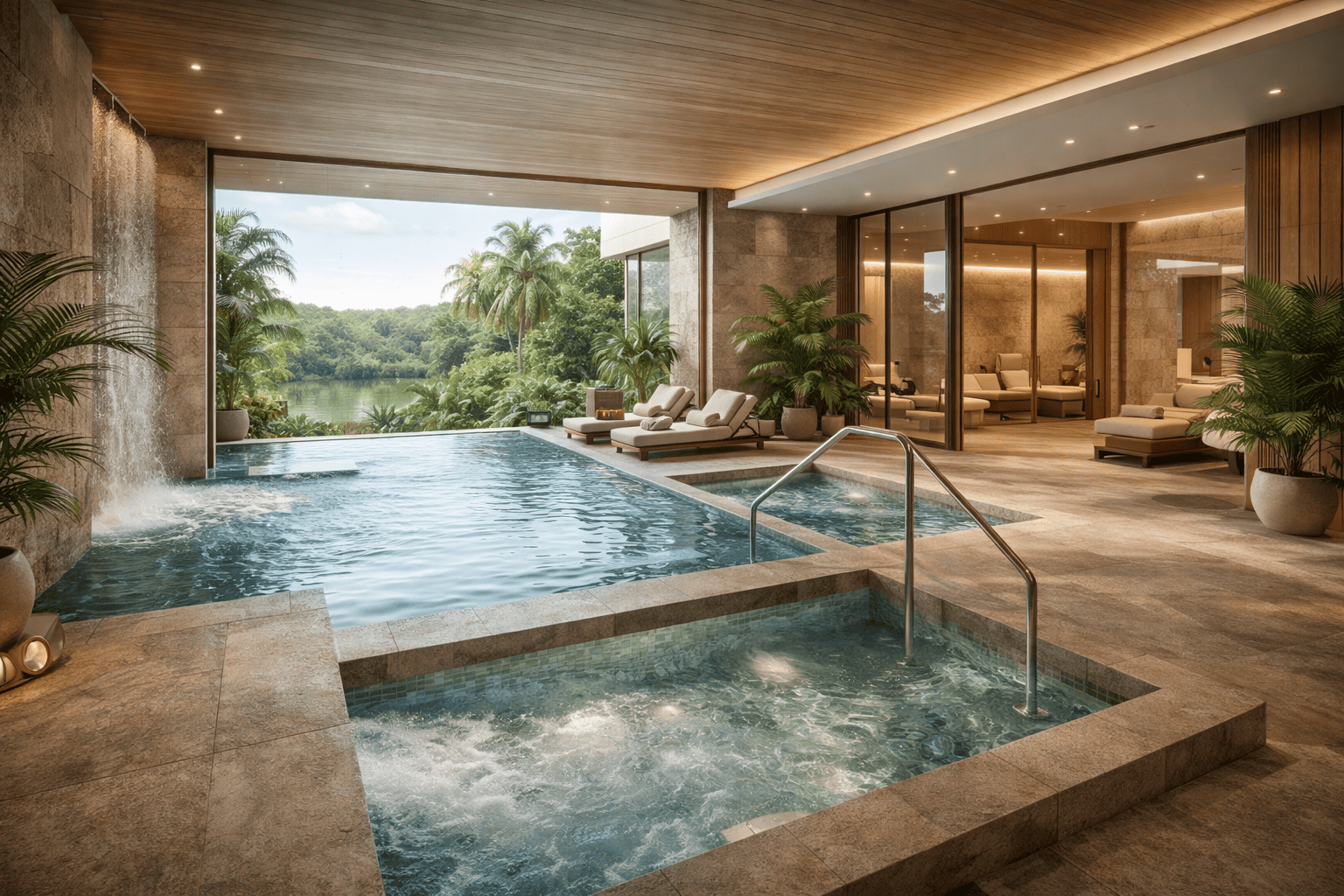
Over the past decade, wellness architecture has evolved from a trend into a strategic foundation in luxury design. It is no longer enough to create visually impressive buildings; today’s leading projects are conceived as environments capable of improving quality of life.
Five-star hotels, specialised clinics, private villas and wellness gyms share a common principle: space directly influences how we feel, how we recover and how we age. This approach is closely connected to longevity treatments applied to wellness, where architecture, technology and experience converge to support sustained vitality over time.
At GodoPools, we understand wellbeing architecture as an integrated discipline that unites engineering precision, sensory experience and conscious design to create healthy spaces that genuinely transform.
What is wellness architecture?
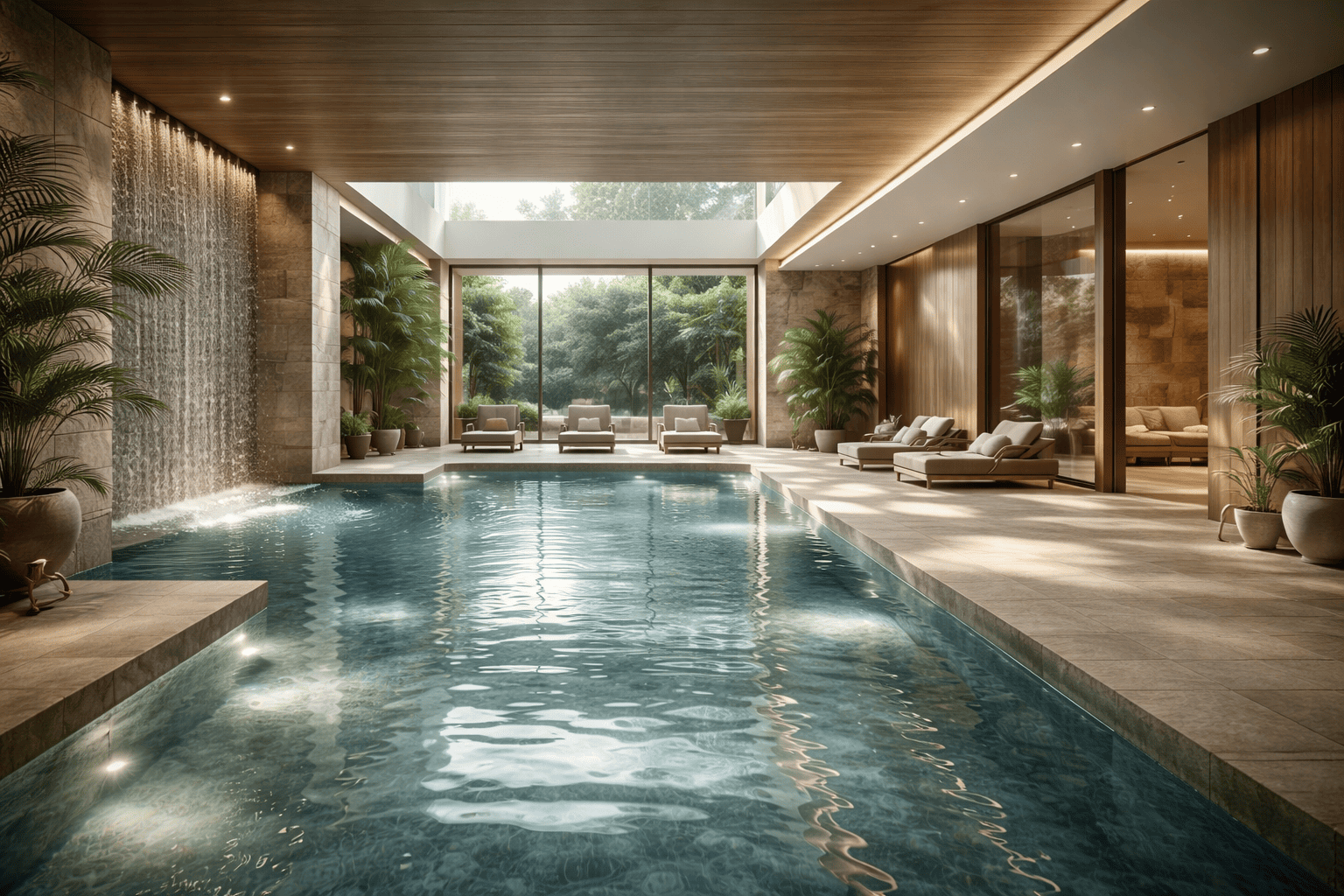
Wellness architecture places physical, mental and emotional health at the centre of architectural design. It goes beyond aesthetics or surface comfort, analysing how light, water, ventilation, materials, acoustics and spatial layout impact the human body.
In essence, it is about designing environments that:
- Support recovery and rest
- Reduce stress
- Stimulate energy and vitality
- Encourage healthy habits
Unlike conventional architecture, every decision in architecture for health is guided by one key question: How does this space affect the wellbeing of its users?
Healthy architecture and healthy spaces: the fundamental pillars
When we speak about healthy architecture, we refer to measurable design principles that shape wellbeing spaces in a tangible way.
1. Natural light and circadian regulation
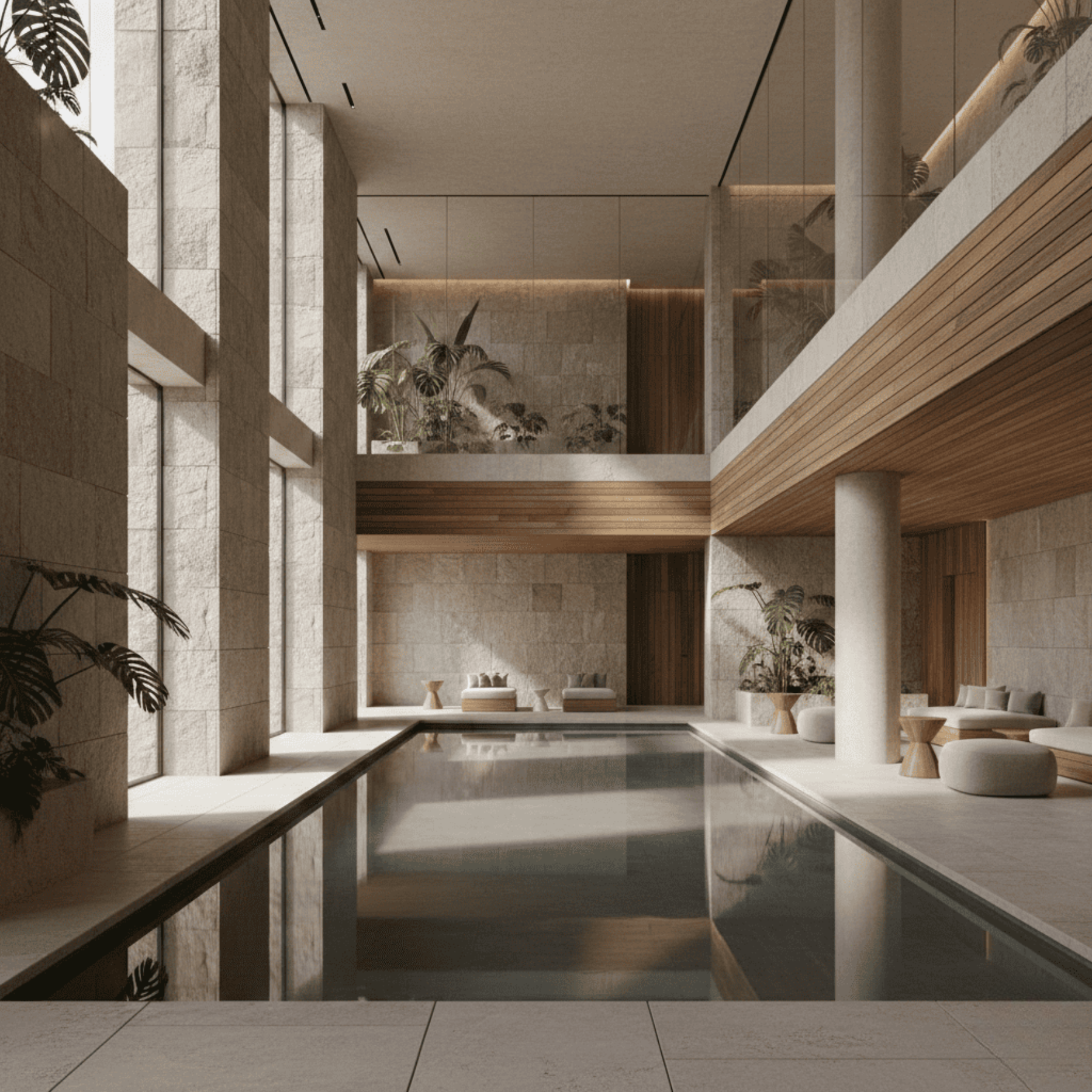
Lighting is not decorative; it is biological. Proper exposure to natural daylight regulates melatonin and cortisol production, influencing sleep cycles, mood and cognitive performance.
At GodoPools, whether designing a spa, a longevity clinic or a wellness gym, we carefully analyse orientation and daylight penetration. In hydrotherapy areas, we prioritise large glazing or skylights to create soft, immersive light.
In treatment cabins, adjustable lighting systems replicate natural cycles: warm, dim light for deep relaxation and gradual transitions that avoid abrupt sensory shifts.
In fitness environments, energising cooler tones enhance performance zones, while recovery areas feature warmer lighting to promote post-training calm. This balance allows us to create authentic wellbeing spaces aligned with human rhythms.
2. Air quality and ventilation
Air quality is a defining factor in health architecture. In high-humidity environments such as heated pools, saunas or steam rooms, inadequate ventilation can cause discomfort, condensation and material degradation.
We implement specialised air renewal systems tailored to wellness environments, balancing temperature, humidity and air purity. In hydrotherapy circuits, dehumidification is precisely calculated to ensure respiratory comfort.
Treatment rooms are equipped with silent, independent ventilation systems to maintain microclimatic control. In wellness gyms, continuous air exchange prevents CO₂ build-up and enhances physical performance.
The goal: the system remains invisible, but its benefits are unmistakable.
3. Noble and non-toxic materials
Material selection influences both aesthetics and environmental health. Low-quality synthetic finishes may emit volatile compounds, while natural materials foster balanced atmospheres.
Our wellness architecture design projects incorporate natural stone, certified timber suitable for humid conditions, mineral coatings and breathable finishes. In treatment cabins, tactile warmth and material authenticity contribute to psychological comfort.
In hydrotherapy areas, materials must resist moisture and temperature variation while preserving visual harmony. In gyms, technical flooring absorbs impact without compromising indoor air quality.
Healthy architecture begins with the material palette.
4. Thermal and acoustic comfort
A visually stunning space can still feel uncomfortable if thermal or acoustic control is neglected.
In wellness projects, we design thermal circuits with clearly defined zones: intense heat in saunas, controlled humidity in hammams, cold immersion pools and neutral relaxation areas. Transitions are studied to prevent abrupt changes.
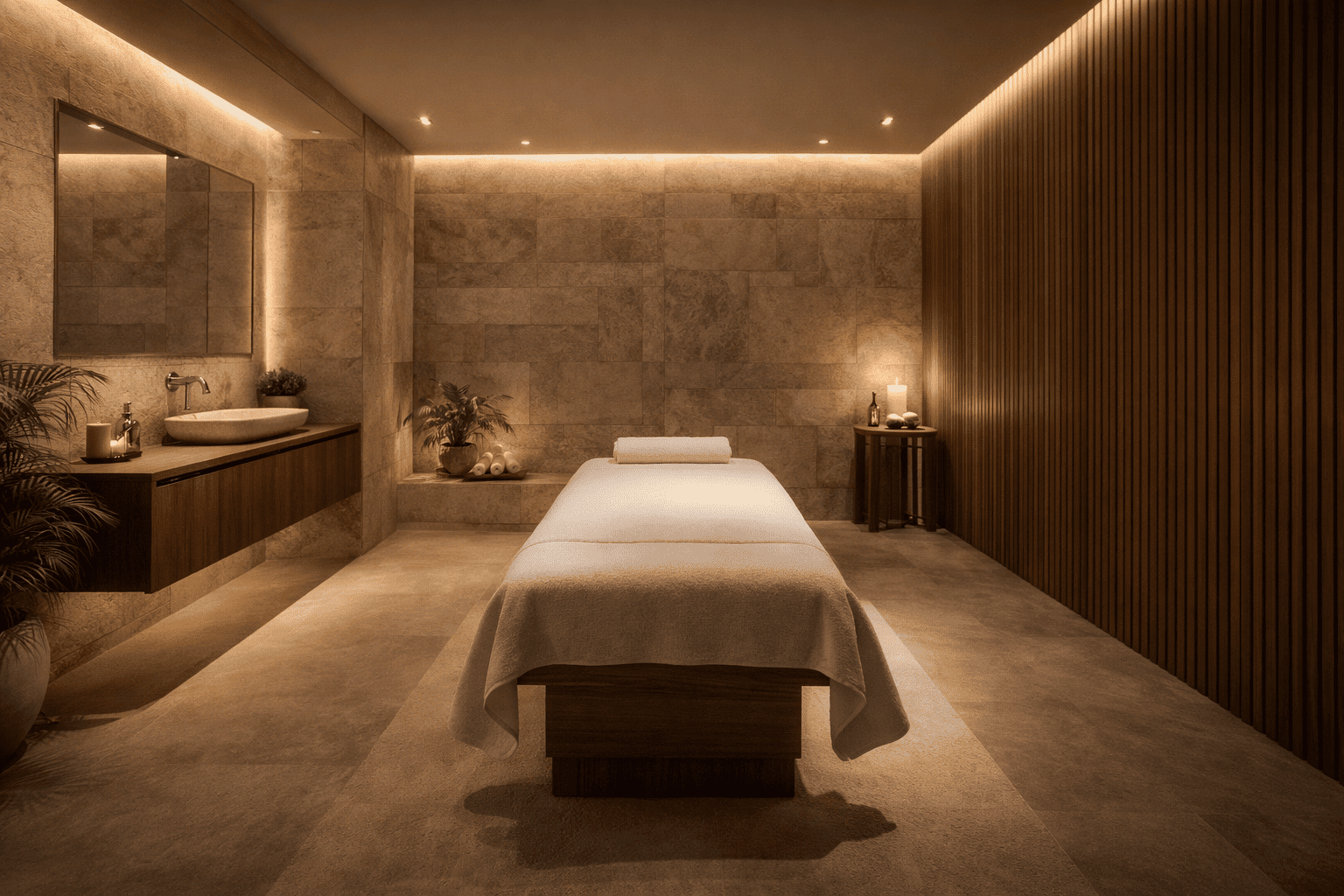
In treatment cabins, acoustic insulation is critical. Hidden sound-absorbing panels, technical doors and vibration control systems prevent interference from adjacent wet areas.
In fitness environments, acoustic zoning separates high-energy training from stretching or recovery spaces, reinforcing the principles of environments for health architecture.
Thermal and acoustic precision transforms a beautiful space into a truly healthy space.
5. Water and biophilic integration
Water is the core element in many of our projects and one of the most powerful pillars of wellness architecture. Its sound, movement and temperature produce immediate physiological effects: reduced stress, regulated heart rate and a deep sense of calm.
At GodoPools, water is not merely a pool, it is an experience: cervical waterfalls, hydromassage beds, overflow sheets, contrast circuits and sensory showers combining water, light and thermal stimuli.
In longevity clinics or luxury resorts, we design user journeys moving between heat, cold and flowing water to create regenerative sequences. In private villas, water often becomes the visual and emotional axis of the architectural concept.
Biophilic design, integrating natural elements, enhances these spaces through vegetation, organic materials and open views. Water and nature together shape harmonious, protective environments.
Water is not decoration; it is the technical and sensory heart of wellness architecture.
How wellness architecture is applied in luxury projects
In the premium sector, wellness architecture is not an optional feature; it is the conceptual foundation of the project.
At GodoPools, we develop spaces where engineering precision and sensory design merge seamlessly.
This approach is applied in:
- Boutique resorts with carefully choreographed thermal circuits
- Longevity clinics integrating hydrotherapy, contrast zones and treatment cabins
- Private residences with bespoke spa environments
- Fitness centres with advanced recovery ecosystems
A spa is not a collection of rooms; it is a sequence of sensations. A longevity clinic is not only advanced technology; it is an architectural atmosphere of trust, calm and regeneration.
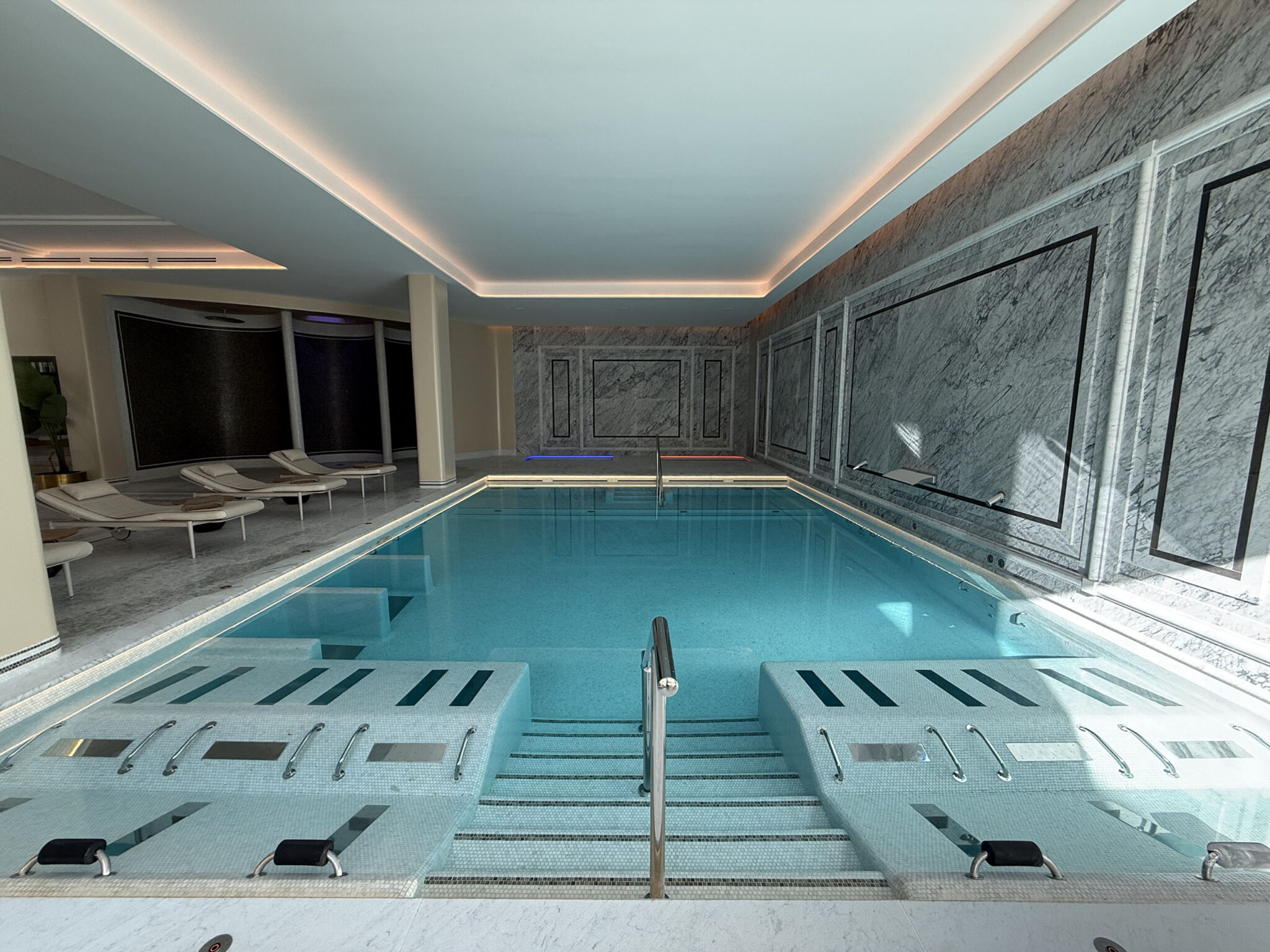
A clear example is our work at ZEM Wellness Clinic Altea, an international reference in integrative longevity medicine. Here, wellbeing architecture materialises in hydrotherapy circuits and contrast zones designed to integrate seamlessly with the clinic’s global therapeutic vision.
You can see the project here:
👉 https://youtu.be/SIQJ35Nh60U?si=MfifqcITHsHV0tEk
This type of development positions GodoPools as a benchmark in wellness architecture applied to water, where technical decisions elevate experiential excellence.
Wellness architecture applied to treatment cabins
Treatment cabins are not isolated rooms; they are carefully calibrated wellbeing environments.
Within health care architecture, they must:
- Minimise unnecessary stimuli
- Control light and temperature
- Optimise acoustics
- Encourage deep relaxation
Therapies such as massage, mud wraps and regenerative treatments rely on spatial coherence. Layout, materials and climate control directly shape outcomes.
In high-level clinics and luxury spas, technical precision in cabin design defines the difference between standard service and transformative experience.
Wellness architecture and hydrotherapy: water as therapeutic axis
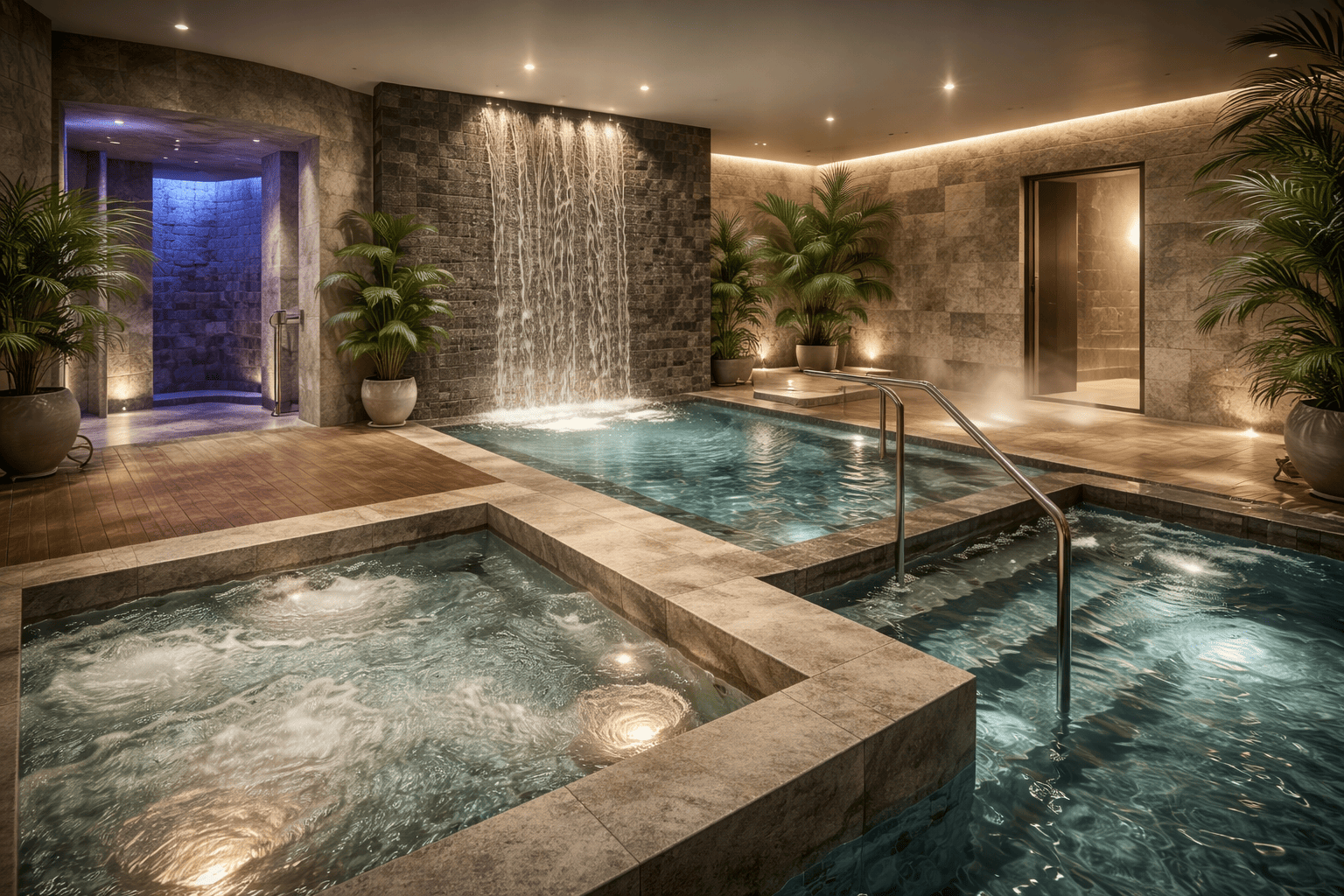
Hydrotherapy is perhaps the clearest demonstration of architecture influencing health.
We design complete water circuits including contrast pools, massage jets, cervical waterfalls and bubble beds.
To explore this further, read our article on types of hydrotherapy in luxury wellness spaces
Hydraulic planning, jet pressure, temperature calibration and user circulation are not just engineering. They are core aspects of wellness architecture design.
You can also discover how snow cabins integrate into contrast circuits here:
All about snow cabins.
Healthy architecture in contrast spa circuits
Thermal contrasts, sauna, hammam, sensory shower, cold plunge, are central to healthy spaces.
Design must ensure:
- Progressive thermal transitions
- Intermediate relaxation areas
- Moisture-resistant materials
- Dedicated ventilation for each cabin
For deeper insight into cold exposure benefits, see:
Thermal Constrast therapy
This is where architecture for health meets experiential design.
Wellness architecture in fitness environments
The relationship between fitness and well-being is now inseparable. A high-end gym can no longer be understood as an isolated room full of machines, but rather as a natural extension of the wellness ecosystem. Within the framework of wellness architecture, the fitness space is designed to stimulate movement, but also to facilitate recovery, concentration, and mental balance.
At GodoPools, we conceive of gyms as integrated environments within a comprehensive project vision. This involves studying orientation, natural light, cross-ventilation, materials, and internal circulation so that the experience flows intuitively. A user can train, move to a stretching area, continue to a contrast circuit, or finish in a recovery area without leaving the same aesthetic and functional space.
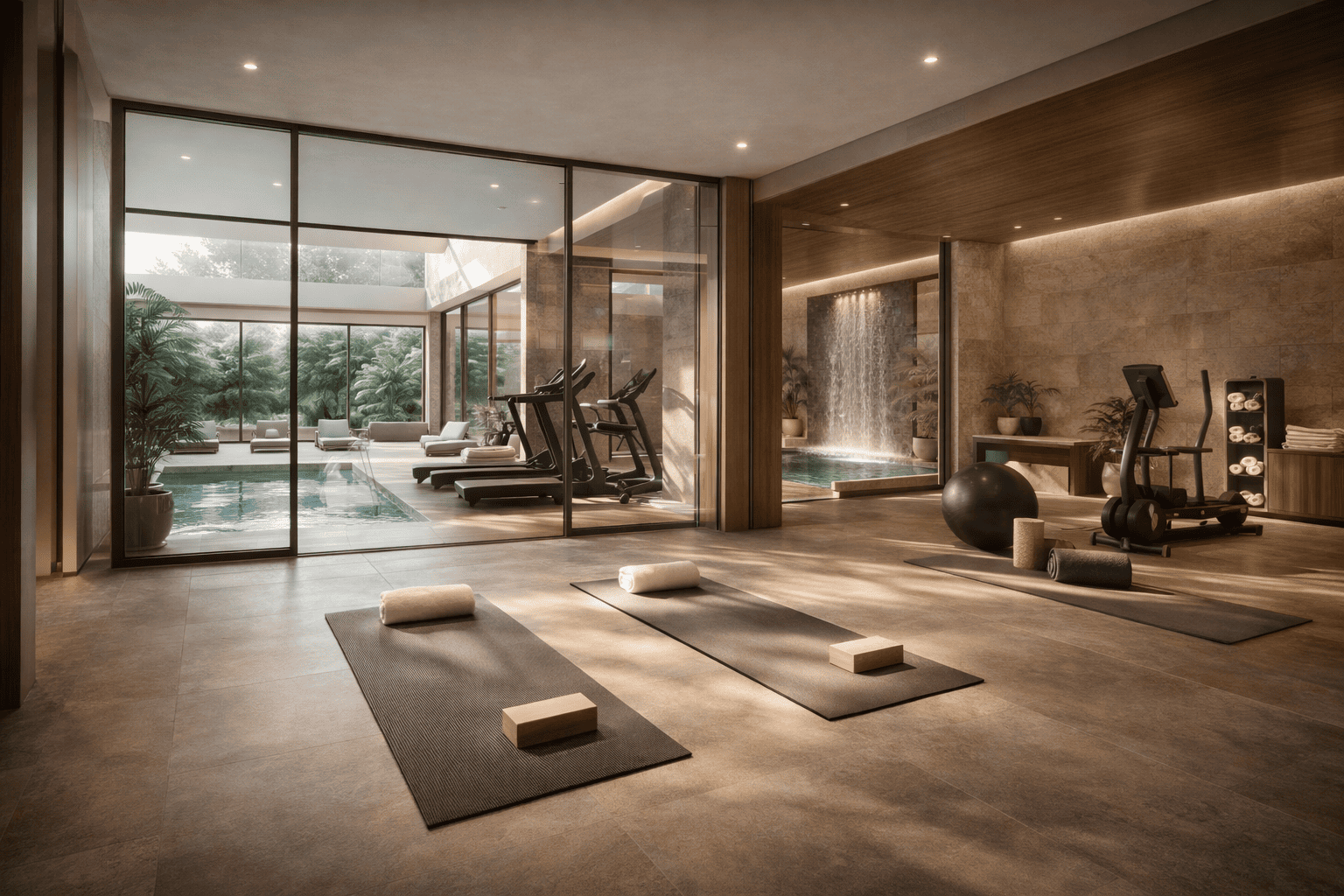
In our modern gym projects, the design connects the training area with the wellness zone through smooth transitions, lighting changes, and a selection of cohesive materials. It’s not just about physical performance, but about creating spaces that promote active longevity. You can delve deeper into this approach in our article on modern gyms within the architecture of wellness.
Healthy architecture applied to fitness involves:
- Strategic layout that avoids visual clutter, separating cardio, strength, and recovery zones to maintain order and mental clarity.
- Integration of natural light and circadian rhythms, which boost energy during training and promote relaxation in rest areas.
- Dedicated spaces for yoga, mobility, and breathwork, where acoustic and thermal design supports the mind-body experience.
- Direct connection to hydrotherapy and contrast therapy areas, allowing training to be complemented with advanced recovery protocols.
Thus, the fitness space ceases to be a place of isolated exertion and becomes an essential component of wellness architecture: movement, regeneration, and balance designed as a continuous experience.
Wellness architecture as a competitive advantage
In high-end hotels, resorts, and clinics, wellness architecture has ceased to be an added value and has become a strategic business decision. It’s not just about offering an attractive spa, but about integrating wellness into the project’s DNA to gain a competitive edge.
The premium client no longer seeks only visual luxury or spectacular facilities for photographs. They seek genuine regeneration, physical and mental recovery, and experiences that positively impact their health. They want to sleep better, reduce stress, exercise effectively, and feel cared for in every detail of their journey.
For business owners and hotel chain executives, this represents a clear opportunity: to transform the wellness area into an engine for differentiation, customer loyalty, and profitability. A project designed according to the principles of healthy architecture:
- Increases the perceived value of the brand.
- Allows for higher rates in premium segments.
- Increases the average length of stay associated with wellness programs.
- Builds an international reputation in wellness tourism.
Furthermore, designing healthy spaces from the outset avoids costly technical errors, system incompatibilities, and subsequent renovations. Comprehensive planning, encompassing everything from plumbing to sensory experience, optimizes investment and ensures efficient long-term operation.
Wellness architecture is not an expense: it’s a positioning strategy. And in a market where luxury is evolving toward health and longevity, projects that integrate this vision will lead the sector in the coming years.
Wellness architecture in GodoPools projects
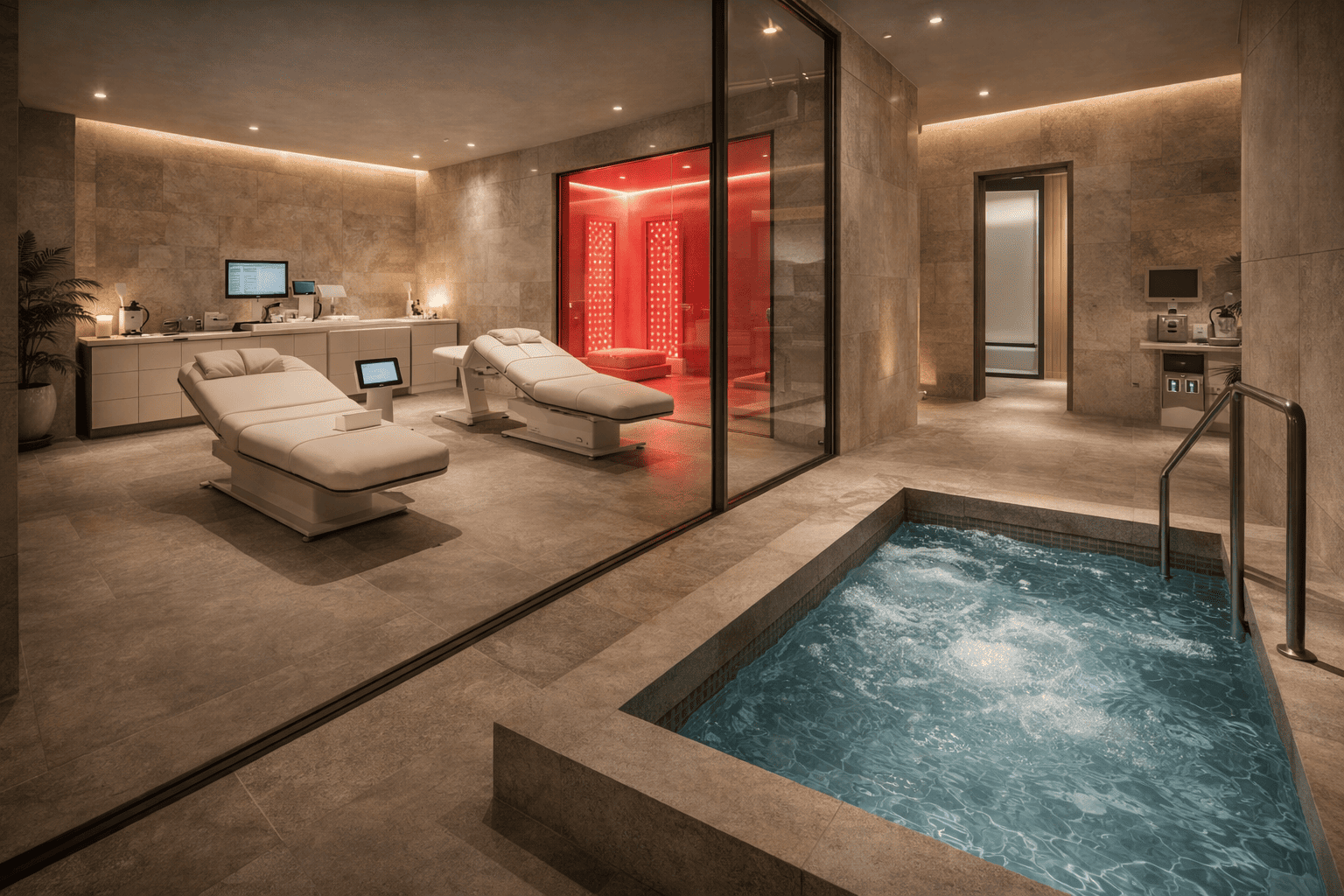
At GodoPools, we apply these principles across:
- Integrated resort wellness areas
- Longevity clinics with contrast circuits
- Private villas with bespoke spa and fitness
- Hybrid spaces combining hydrotherapy and training
Our approach unites:
- Architectural design
- Specialised engineering
- Sensory experience
- Healthy spaces
- Deep technical expertise in water systems
Conclusion: wellness architecture as the new standard
Wellness architecture is not a passing trend. It is the present and future of luxury hospitality and healthcare architecture.
Integrating principles of healthy architecture means recognising that every detail, from light to water pressure, influences wellbeing.
At GodoPools, we develop bespoke projects combining treatment cabins, hydrotherapy and fitness within a coherent and technically refined vision.
If you are developing a spa, wellness hotel or private recovery space, we would be delighted to help transform your vision into reality.
Frequently asked questions about wellness architecture
What is the difference between wellness architecture and traditional architecture?
Wellness architecture places physical, mental and emotional health at the centre of design. Rather than focusing only on aesthetics or functionality, it studies how light, air quality, water, materials and spatial distribution directly impact human wellbeing and long-term vitality.
What is healthy architecture?
Healthy architecture is a branch of wellness architecture that prioritises natural light, air quality, non-toxic materials, thermal comfort and acoustic control to create healthier indoor environments. It aims to design spaces that actively support the body’s biological rhythms and overall health.
In which types of projects is wellness architecture applied?
Wellness architecture is applied in luxury hotels and resorts, longevity clinics, spas, wellness centres, boutique fitness clubs and private residences with integrated spa and recovery areas. It is especially relevant in projects where wellbeing, regeneration and premium experience are key differentiators.
Why is wellness architecture important in the luxury sector?
Today’s premium clients seek more than visual luxury. They expect regeneration, recovery and meaningful wellbeing experiences. Wellness architecture increases perceived value, strengthens brand positioning and enhances guest loyalty in high-end hospitality and health-driven developments.
How can GodoPools support a wellness architecture project?
GodoPools designs and delivers integrated wellness environments that combine treatment cabins, hydrotherapy circuits and fitness areas with architectural precision and technical expertise. Our approach ensures that every element — from water pressure to lighting design — contributes to a coherent and high-performance wellbeing space.