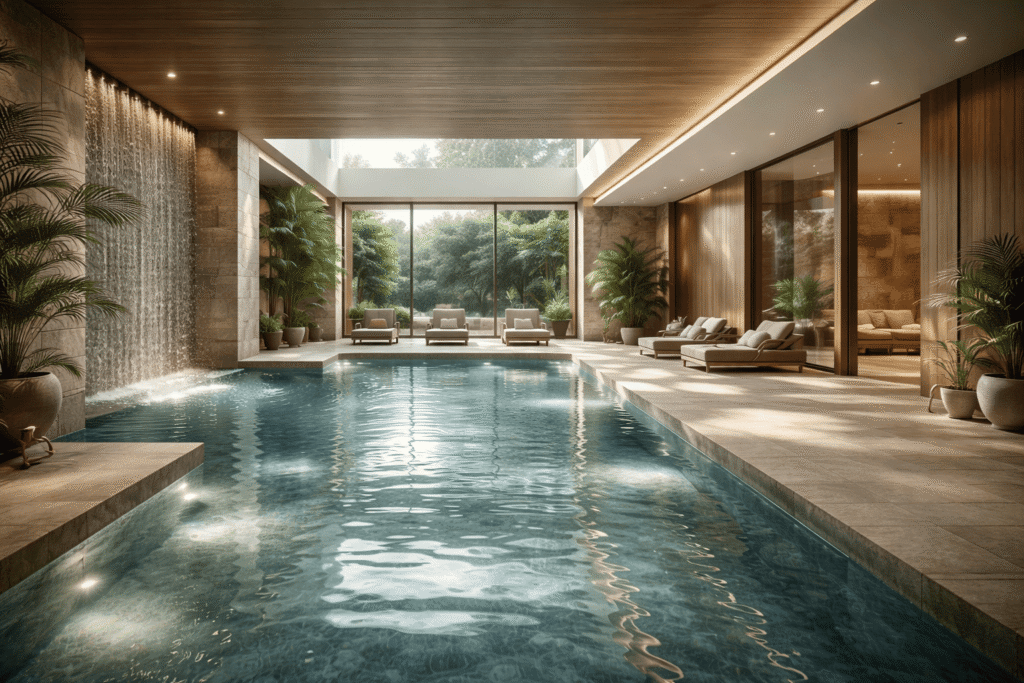
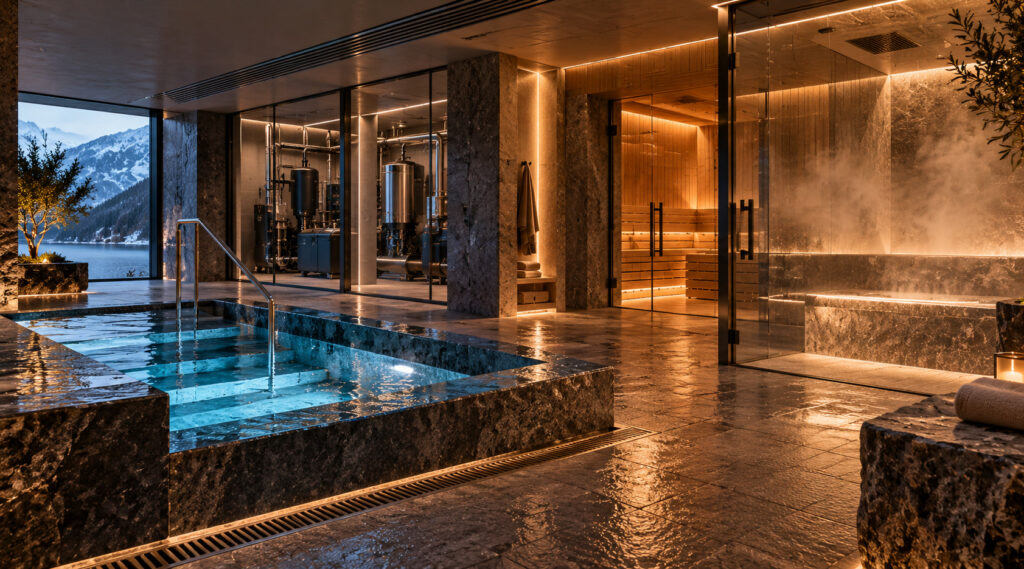
When designing a high-end spa, every detail matters.
Design, sensory experience, and technology merge to offer spaces that not only impress, but also transform the perception of the environment.
Within this approach, chromatic lighting has established itself as one of the most sophisticated tools to enrich the water experience and thermal spaces.
Traditionally, literature on this subject has been limited to lists of hues and broad health claims.
However, in contemporary wellness architecture, we approach chromotherapy in the spa from a project perspective.
That is, clarifying what it truly represents, what nuances each shade provides, how it integrates within a sensory lighting strategy, and what technical and safety considerations must be addressed.
👉 Discover our Architecture of Wellbeing service
What is chromotherapy in contemporary wellness?
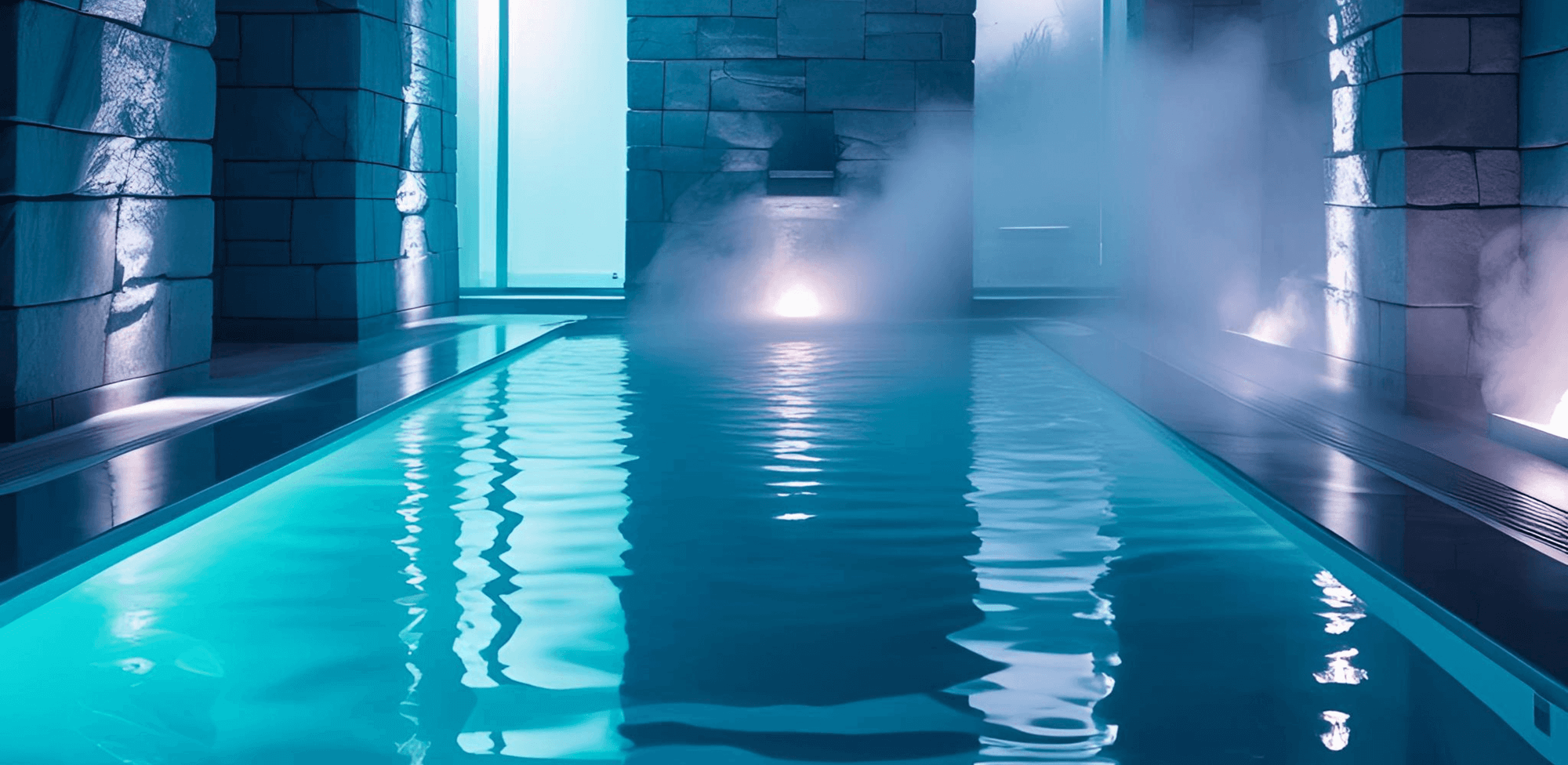
In a wellness environment, chromotherapy is defined as the planned application of coloured light to modulate the atmosphere and spatial perception of an architectural volume.
➜ It is conceived not as a medical intervention or a clinical treatment, but as a sensory resource designed to calibrate the ambiance of each room according to the phase of the journey and the desired experience.
Ancient traditions already associated chromatic tones with specific moods.
Today, luxury architecture revives this principle using advanced LED technology, which offers a broad spectrum of shades, intensities, and fluid transitions.
💡 The true contribution to an exclusive project lies not in the lighting effect in isolation, but in its harmonious integration with the surrounding material palette and space engineering.
Colour as an ambient resource in wellness spaces
Each shade is traditionally associated with a particular sensation, guiding its placement and programming within water and rest zones.
➜ These relationships are best viewed as flexible design guidelines rather than fixed rules, as colour perception is deeply personal and depends on the overall lighting context.
The following table summarises the most commonly used chromatic shades and the spatial atmosphere they aim to generate:
| Shade | Associated atmosphere in the wellness space |
| Red | Energy and stimulation: ideal for active zones, transition areas, or physical preparation spaces. |
| Orange | Warmth and vitality: perfect for social areas and movement corridors. |
| Yellow | Brightness and optimism: reception areas and active-rest spaces. |
| Green | Balance and composure: treatment rooms, relaxation areas, and quiet zones. |
| Blue | Calm and relaxation: flotation areas, massage cabins, and deep rest zones. |
| Indigo and Violet | Introspection and stillness: contemplative spaces, private cabins, and closing rituals. |
Evaluating the value of chromotherapy through practical experience demonstrates its clear utility.
Typically, warm tones generate a sense of enclosure and refuge after a heat circuit, while cooler ranges optimally accompany spaces dedicated to silent relaxation.
From chromotherapy to sensory lighting
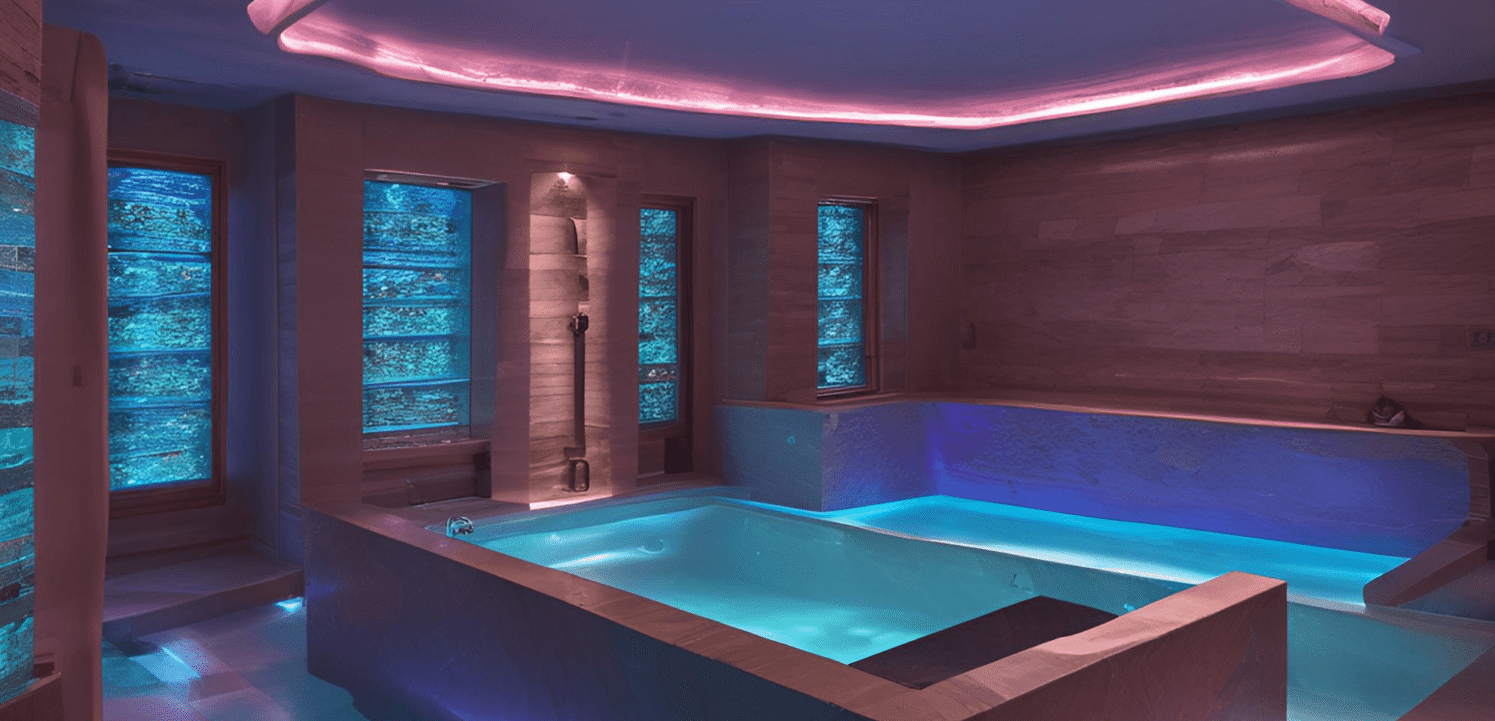
Chromotherapy forms one component of a much broader concept: designing light as an immersive, integrative experience.
A well-balanced sensory lighting scheme does not simply alternate colours statically; it coordinates intensity, colour temperature, direction, ambient light, and subtle accents on water or stone finishes.
➜ In a well-resolved spa, chromatic lighting coexists fluidly with functional and ambient light.
Low-level general lighting can work in tandem with feature accents on the water surface, layering programmable colour sequences.
The objective of lighting design is to ensure these layers sum rather than compete, emulating the spatial coherence of a well-planned hydrotherapy circuit.
Applications in pools, jacuzzis, showers, and saunas
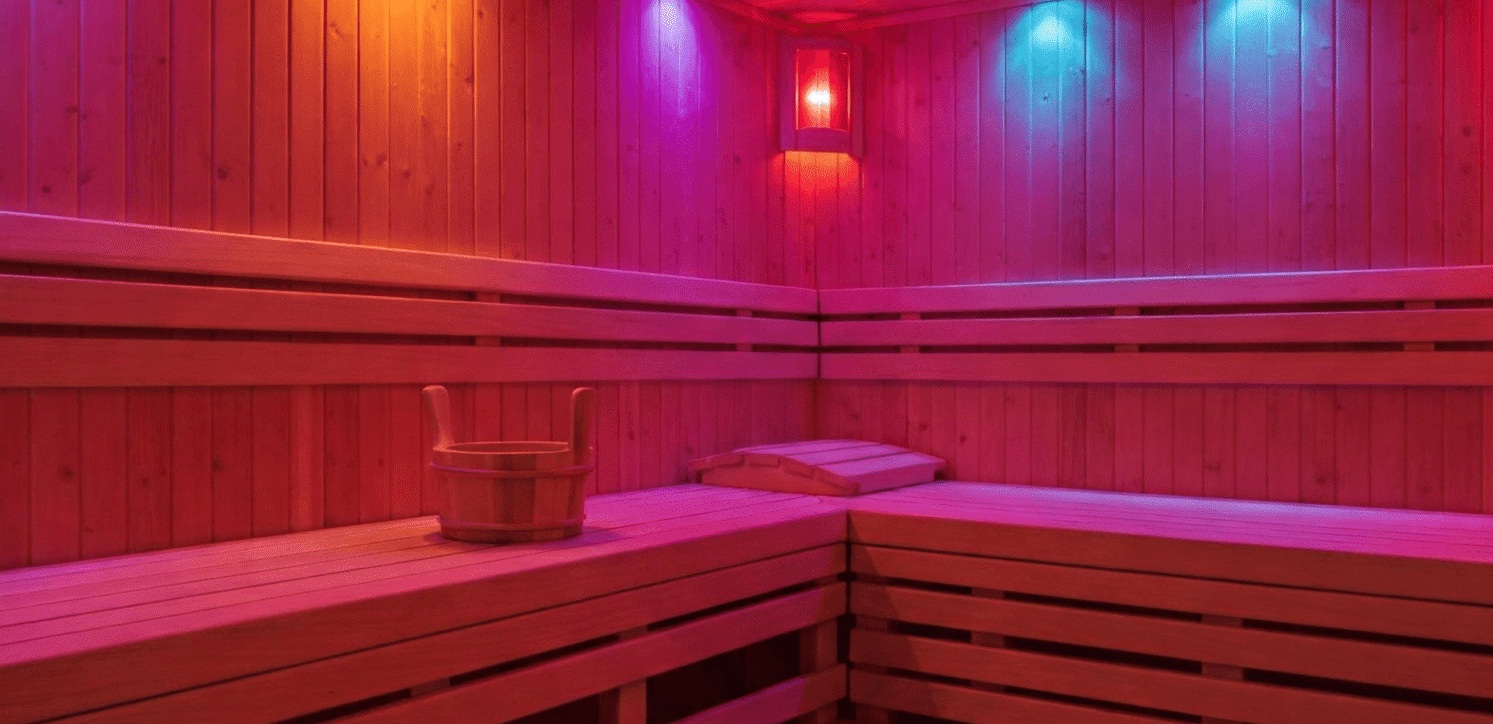
Chromatic lighting demonstrates its versatility across the various stations that make up a high-end wellness facility:
➜ Pools and hot tubs with chromotherapy
Underwater lighting brings colour into the pool, while reflections and movement help shape an immersive atmosphere.
The effect depends on the position of the luminaires, the pool geometry and the finishes.
➜ Sensory showers
Integrated with alternating temperature water jets, aromatherapy, and sound, chromatic lighting enhances a highly dynamic immersive experience.
➜ Saunas and steam rooms
Soft lighting can complement the atmosphere of saunas and steam rooms, with fittings selected and positioned to suit the temperature, humidity and materials of each space.
➜ Treatment cabins
Zones where light is graduated to accompany specific massages or body rituals, adapting the tone to the phase of the protocol.
Technical and architectural integration of light
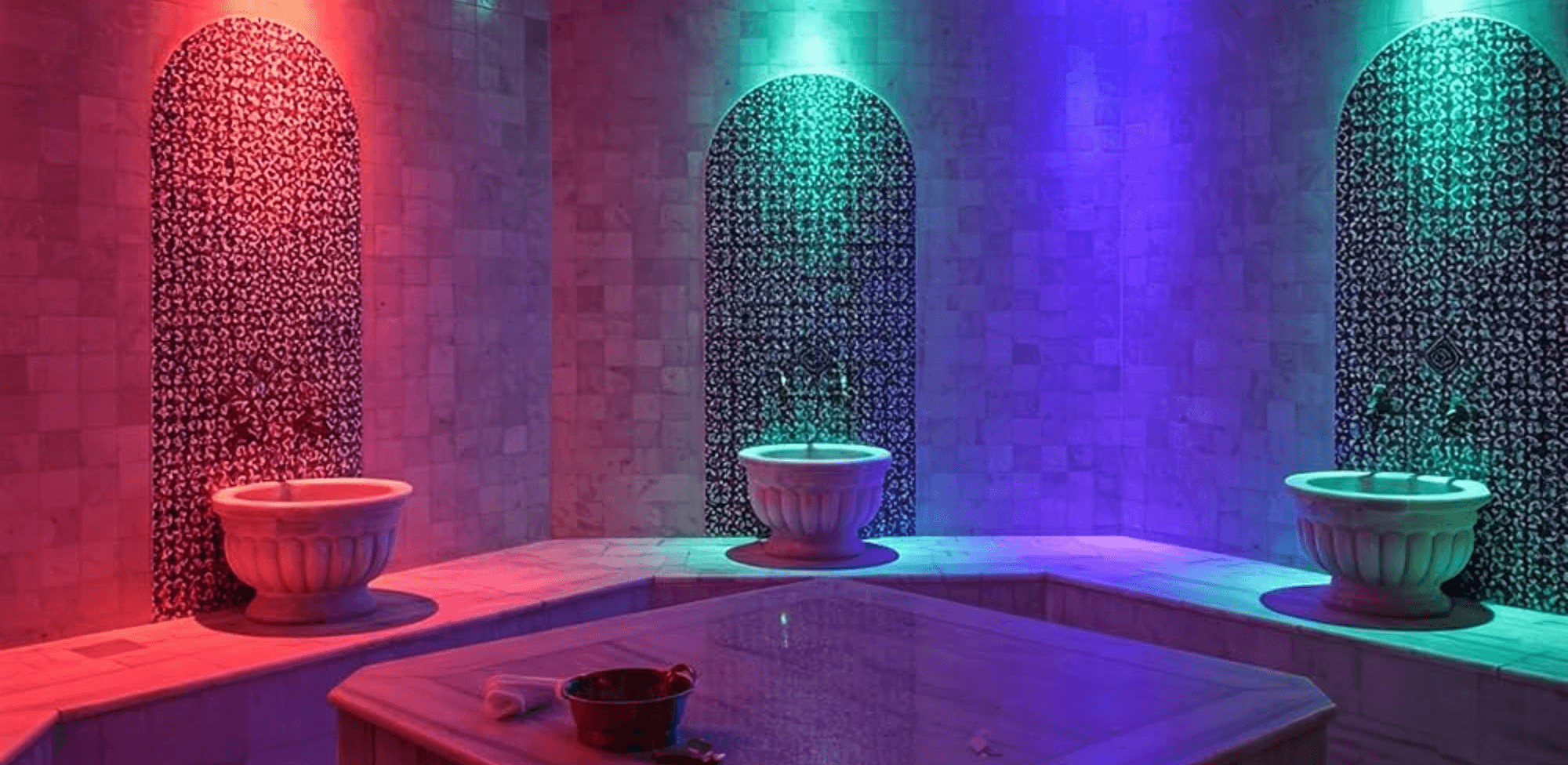
A flawless, durable visual outcome in pool chromotherapy or wet areas requires solving complex engineering decisions from the early stages of the project:
➜ Electrical protection and regulations
Rigorous selection of LED fixtures with appropriate ingress protection (IP) ratings for continuous immersion and strict compliance with low-voltage safety standards in wet zones.
➜ Colour fidelity and optics
Choosing high-end equipment with optics that prevent glare and ensure uniform colour distribution across water and wall surfaces.
➜ Glare control and automation
Integrating dimming systems with the building’s or hotel’s general automation network, enabling intuitive lighting scenes.
➜ Maintenance and accessibility
Strategic placement of niches, access points, and power supplies to simplify periodic maintenance routines without compromising watertightness.
At GodoPools, we integrate chromatic lighting and sensory design within global technical development, coordinating hydraulic engineering, lighting, finishes, and control systems with the project’s architecture.
We design and select solutions tailored to each project, considering technical performance, maintenance requirements and how the lighting complements the architecture.
Comfort and safety in lighting
Rigorous design must incorporate responsible usage and safety guidelines.
Programmable lighting systems in public or hospitality areas must avoid abrupt shifts or rapid flashing frequencies, as they can trigger discomfort in photosensitive individuals (such as those with photosensitive epilepsy).
It is recommended to prioritise gradual transitions, smooth gradations, and stable control options.
Conclusion
As we have seen, integrating chromotherapy into pools and wellness spaces is far more than adding coloured lights:
➜ It is a design decision aimed at enriching spatial perception and user comfort through coherent sensory lighting.
At GodoPools, we develop wellness architecture projects by unifying light, water, and materials into a global technical and aesthetic strategy.
Explore our wellness architecture services to discover how we integrate lighting, water and materials into bespoke aquatic and wellness projects.
If your private residence, hotel, or resort project seeks sophistication, innovation, and construction excellence, sensory lighting is a key consideration.
📥 Get in touch with our technical team to evaluate the lighting integration of your wellness project.
Frequently asked questions (FAQs)
➜ What is chromotherapy in spa design?
It is the planned application of coloured light to modulate the atmosphere of each space within a wellness journey, functioning as a sensory resource that enriches the user experience.
➜ What aspects must be considered when designing sensory lighting for a spa?
It is essential to coordinate lighting intensity, colour temperature, glare control, functional and ambient lighting layers, and their integration with home automation systems from the project phase.
➜ How are chromotherapy systems integrated into luxury pools?
Through high-performance submersible LED lights, perimeter projectors, and automated dimming systems that use the water surface as a natural colour-diffusing element within a technically watertight environment.
➜ What technical and safety considerations does lighting require in wet zones?
It requires luminaires with ingress protection ratings suited to their location and exposure to water, materials compatible with the pool environment, and electrical installations designed to meet applicable safety requirements.
Lighting controls should avoid rapid flashing, favour gradual transitions and allow settings to be adjusted for users with light sensitivity.