Most delays and cost overruns when building a swimming pool do not arise during excavation or when the concrete is poured.
In reality, they take shape months earlier on paper, owing to technical, structural or regulatory factors that were not properly analysed in the early stages.
A luxury pool feasibility study is the essential tool that helps anticipate risks and make the technical decisions that will shape the durability, performance and final quality of the project.
At GodoPools, this initial phase goes far beyond checking whether the structure fits on the plot; it serves to design an integrated strategy in which architecture, engineering, water and wellbeing come together from the earliest stages of the project.
Today we explain more about the feasibility study for a luxury pool.
What does a pool feasibility study really assess?
When a high-end pool is being considered, attention often turns first to the visual design.
A pool feasibility study, however, examines in detail how the build will respond to the physical, architectural and regulatory conditions of the site.
Far from being a bureaucratic formality, this assessment establishes the foundations for everything to work with precision.
To achieve this, engineers and architects analyse essential factors such as the following:
➜ Ground and structural stability
The firmness and bearing capacity of the ground are analysed in order to design a bespoke concrete shell, reducing the risk of future cracks, deformation or settlement.
➜ Architectural integration
The topography of the plot is studied so that the body of water fits with the property and its surroundings, adapting infinity edges, levels and access points in a fully harmonious way.
➜ Orientation and solar exposure
Here the path of the sun throughout the year is assessed to make the most of natural warmth, shelter the area from wind and coordinate the transition between indoor and outdoor spaces, as appropriate.
➜ Hydraulic engineering and energy efficiency
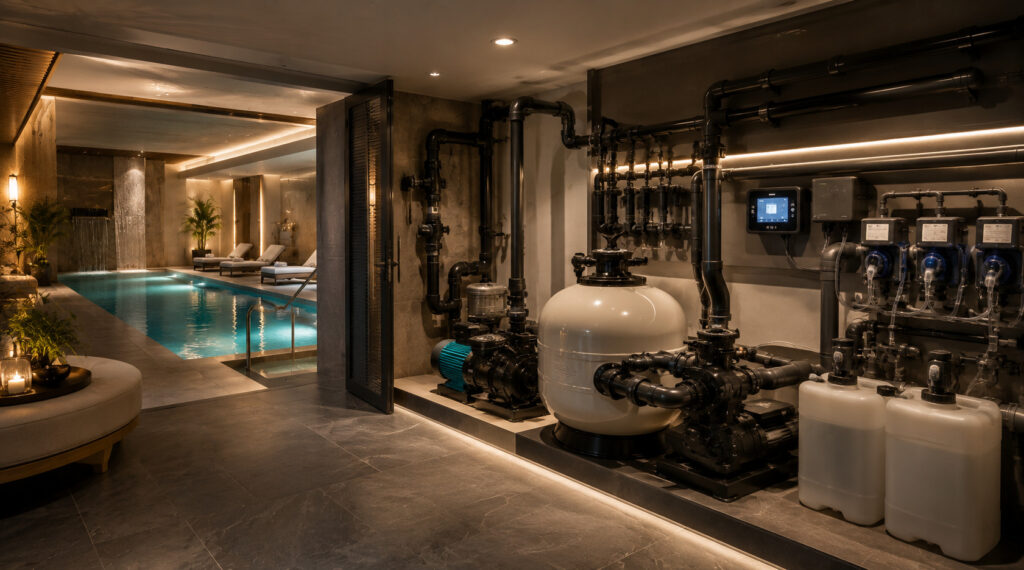
This is where the recirculation, filtration and climate-control systems are sized to deliver crystal-clear water and quiet operation with the lowest possible energy consumption.
➜ Experience of use and maintenance
A luxury pool should be conceived to be enjoyed. Here we plan what daily use will be like, so the experience is ideal and maintenance is automated and intuitive.
Establishing these aspects from the outset allows decisions to be backed by real technical data, reducing uncertainty and allowing design and execution decisions to be based on genuine technical information.
Ground study as the basis for construction
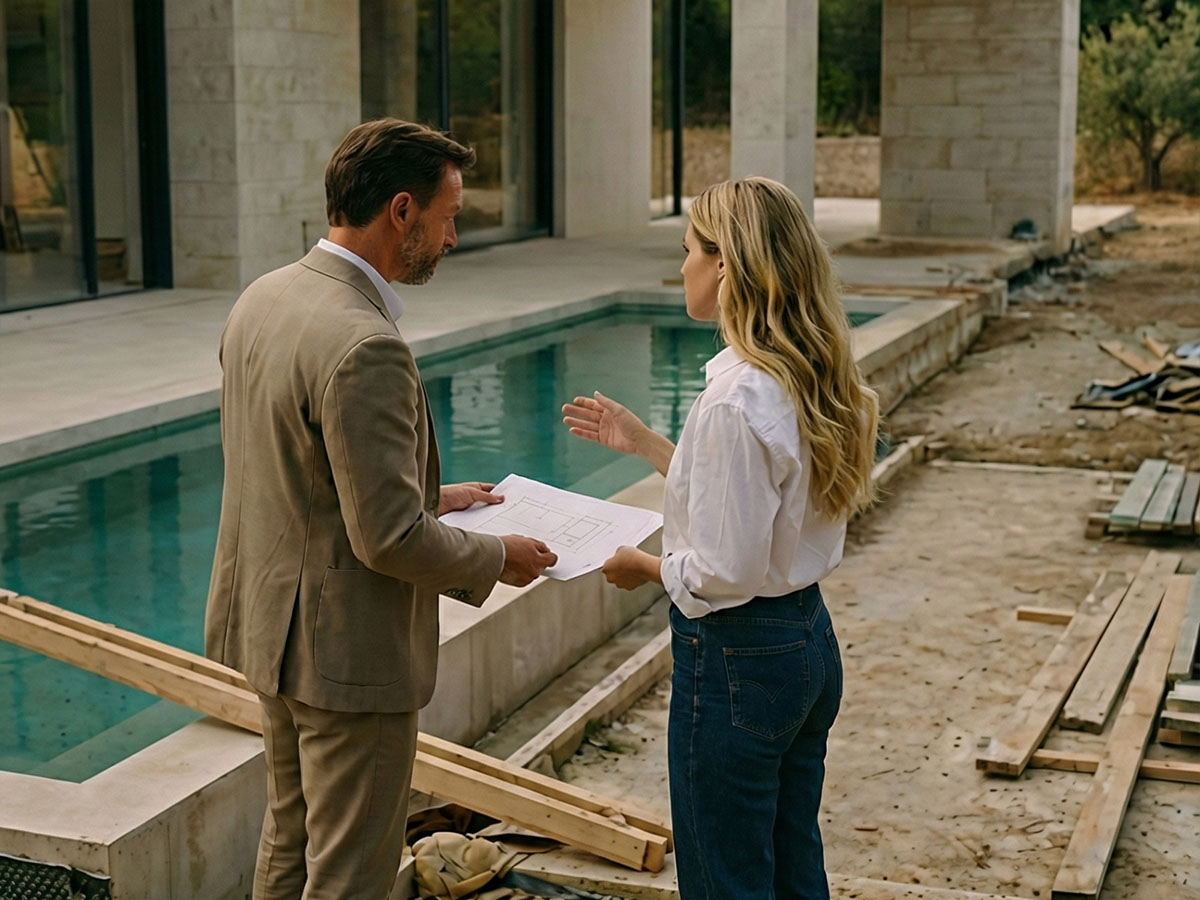 Before thinking about shapes or finishes, you have to look at where the pool will rest.
Analysing the ground is the first essential step in defining how to build a bespoke luxury pool with guarantees of durability.
➜ Geotechnical study and ground firmness
Every plot is different. There are clay soils that change in volume with moisture and others formed by poorly consolidated fill.
Commissioning a complete geotechnical study makes it possible to characterise the load-bearing conditions of the ground and size the structure accordingly, which helps reduce the risk of differential settlement, deformation or structural pathologies.
➜ Groundwater and hydrostatic pressure
Where water accumulates at shallow depth (known as the water table), it exerts a constant upward force against the base of the pool.
Detecting this groundwater early makes it possible to integrate specific drainage systems to correctly manage hydrostatic pressure and reduce its impact on the shell, particularly when the pool is empty.
Integration with architecture and landscape
High-end architectural pools should not be understood as isolated elements, but as a natural extension of the property.
During the preliminary study, the topography is analysed to work with the different ground levels and integrate solutions such as infinity edges or bodies of water at different heights, according to the visual perspective of the area and the client’s needs.
The functional route between the bathing area, the rest areas and the wellbeing spaces is also planned, so that the transition from the interior of the property to the exterior is natural, comfortable and aesthetically harmonious.
This is particularly important in wellness projects and luxury spas.
Reinforced concrete for bespoke pools
In the construction of architectural pools, reinforced concrete remains the reference material.
Designed in line with the European standard EN 1992 (Eurocode 2), reinforced concrete offers geometric freedom and high durability.
Prefabricated solutions can be suitable in certain contexts, though they offer less flexibility when the project requires complex geometries, architectural integration or fully bespoke solutions.
Risk management in the feasibility study: anticipating to protect the build
One of the greatest values of a luxury pool feasibility study is not only confirming whether the idea is feasible, but identifying in good time the technical challenges that could compromise the project.
Although in engineering it is impossible to reduce the margin of error to zero, a rigorous preliminary assessment makes it possible to identify and significantly reduce many of the common risks in building high-end pools.
Assessing the main variables before excavation makes it possible to define a structural and technical solution adapted to the real conditions of the project.
| Feasibility study stage | Technical risk it helps to mitigate |
| Geotechnical ground analysis | Significantly reduces the likelihood of deformation, uneven settlement or cracks in the shell. |
| Groundwater assessment | Mitigates the impact of hydrostatic pressure and reduces the risk of leaks or displacement of the shell. |
| Architectural integration, orientation and solar exposure | Prevents orientation faults, awkward access or a lack of harmony between the pool and the property. |
| Choice of construction system | Allows a system to be selected that is compatible with the structural and topographical conditions of the plot. |
| Overall spatial planning | Minimises technical interference between the hydraulic, wellness and climate-control installations. |
Architecture of Water, Wellness and Fitness
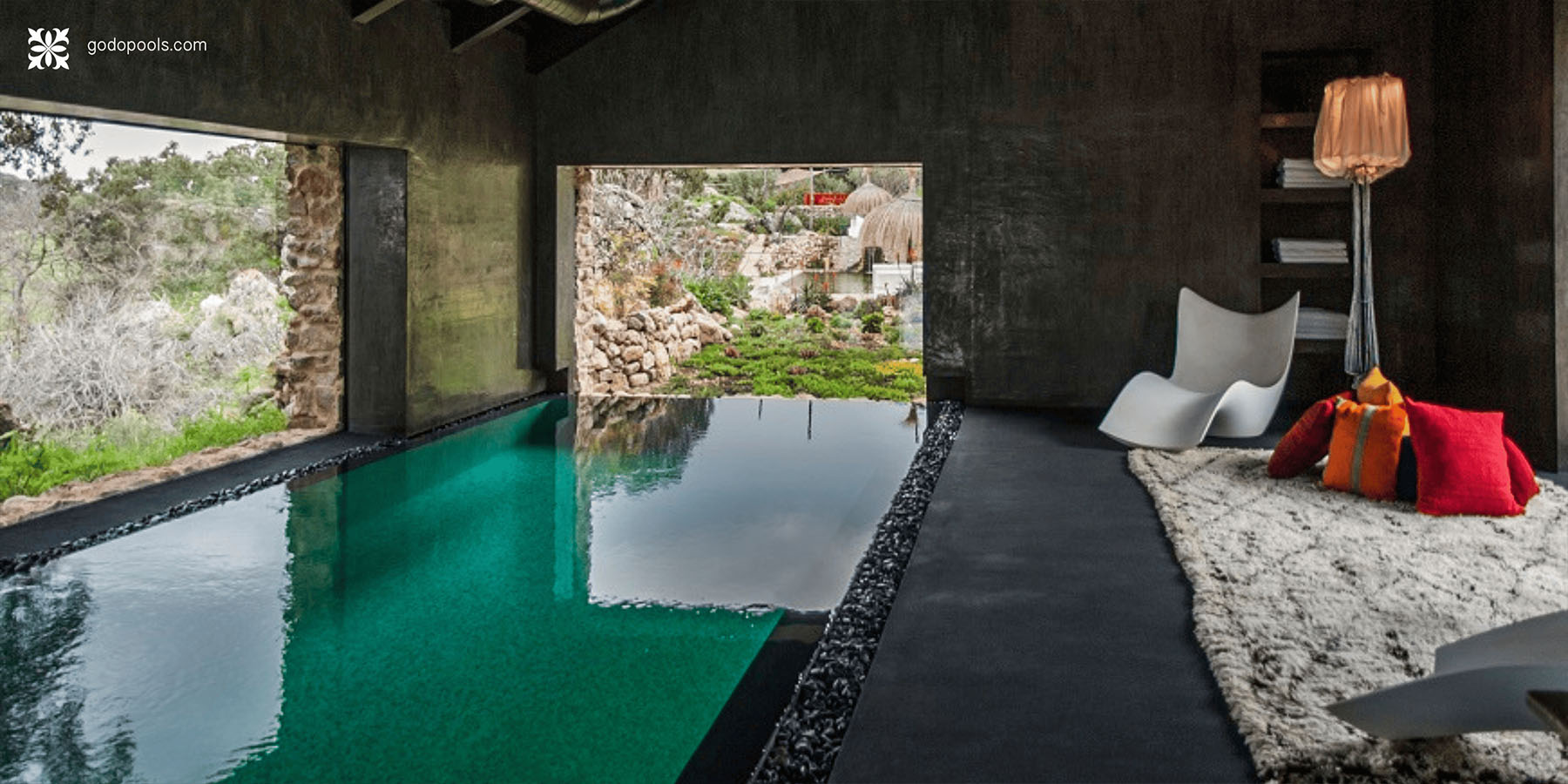 In residential, hospitality or wellness projects, the preliminary study can encompass not only the pool, but the whole set of water, wellbeing and training spaces that will form part of the experience.
Within a single property, it is possible to integrate outdoor and indoor pools, spas, saunas, steam rooms, contrast showers and training areas.
Coordinating the climate-control, acoustic and filtration engineering from the initial phase makes it possible to correctly coordinate the technical, energy and operational performance of all the installations, in both private residences and hospitality projects and luxury hotels.
Conclusion
The success of a high-end pool or wellbeing project depends largely on the decisions made before the build begins.
Planning rigorously makes it easier for the architectural vision to be translated into the build with greater technical control, fewer surprises and better coordination between disciplines.
At GodoPools we analyse the main technical, structural, regulatory and functional factors from the earliest stages of the project, coordinating them with the architecture, the experience of use and the operational needs of the space.
Whether you are developing a private residence, a hotel, a resort or a high-end wellness space, our team can help you define the technical strategy of the project from its earliest stages. Contact us here. 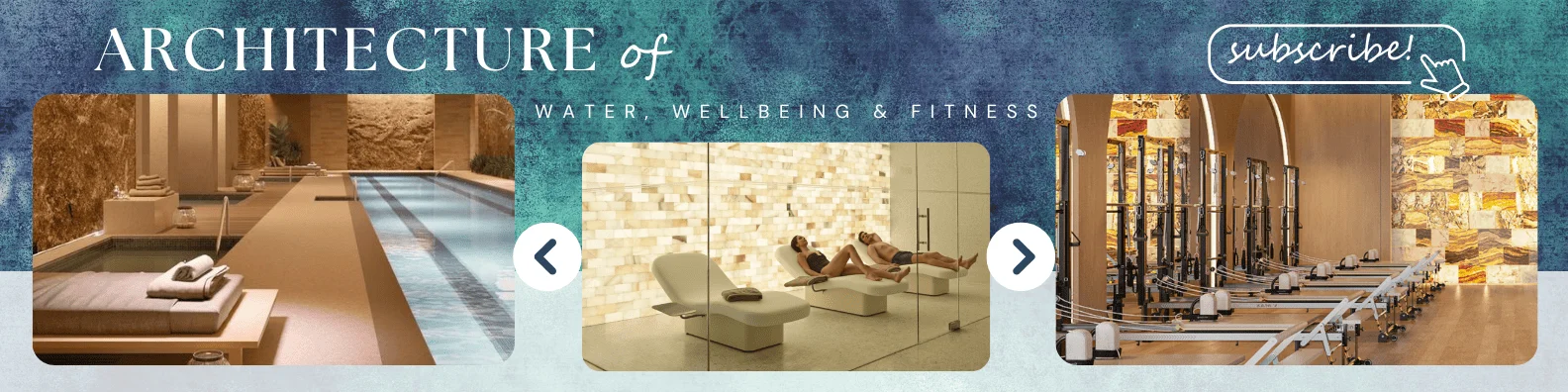
Frequently asked questions (FAQ)
➜ Why is a geotechnical study essential before building a luxury pool?
Because it determines the strength of the ground, the presence of clay or groundwater, and makes it possible to design the appropriate reinforced concrete structure to help prevent future failures.
➜ What is the best technique for fully bespoke architectural pools?
Sprayed or poured reinforced concrete, designed in line with Eurocode 2 (EN 1992), as it offers high durability and great design freedom when correctly calculated and executed.
➜ Can groundwater damage a concrete pool?
Yes. If it is not managed with drainage during the preliminary study, the hydrostatic pressure of the water table can crack or push the pool shell upward when the pool is empty.