Every deck-level or infinity pool hides a quiet piece of engineering behind its seamless water edge.
Integrated discreetly within the project’s technical infrastructure, this essential component helps the continuous overflow effect operate in a stable and reliable way.
Below, we explore what a swimming pool balance tank is, how balance tank sizing works and why it plays an essential role in the hydraulic operation of deck-level and infinity pools.
What is a balance tank and how does it work?
A swimming pool balance tank, also referred to as a swimming pool surge tank or compensation tank, is an element of the hydraulic system intended to collect and compensate for the variations in water volume inherent to the operation of an overflow pool.
Its function is to absorb variations in volume and to help maintain the hydraulic conditions needed for a stable overflow.
➜ In a deck-level or infinity pool, the water that passes over the edge is collected by a channel or collection system and conducted by gravity towards the balance tank.
The recirculation-system pumps then draw water from the tank, conduct it through the treatment and filtration system and subsequently return it to the main pool shell.
Why overflow pools require a balance tank system
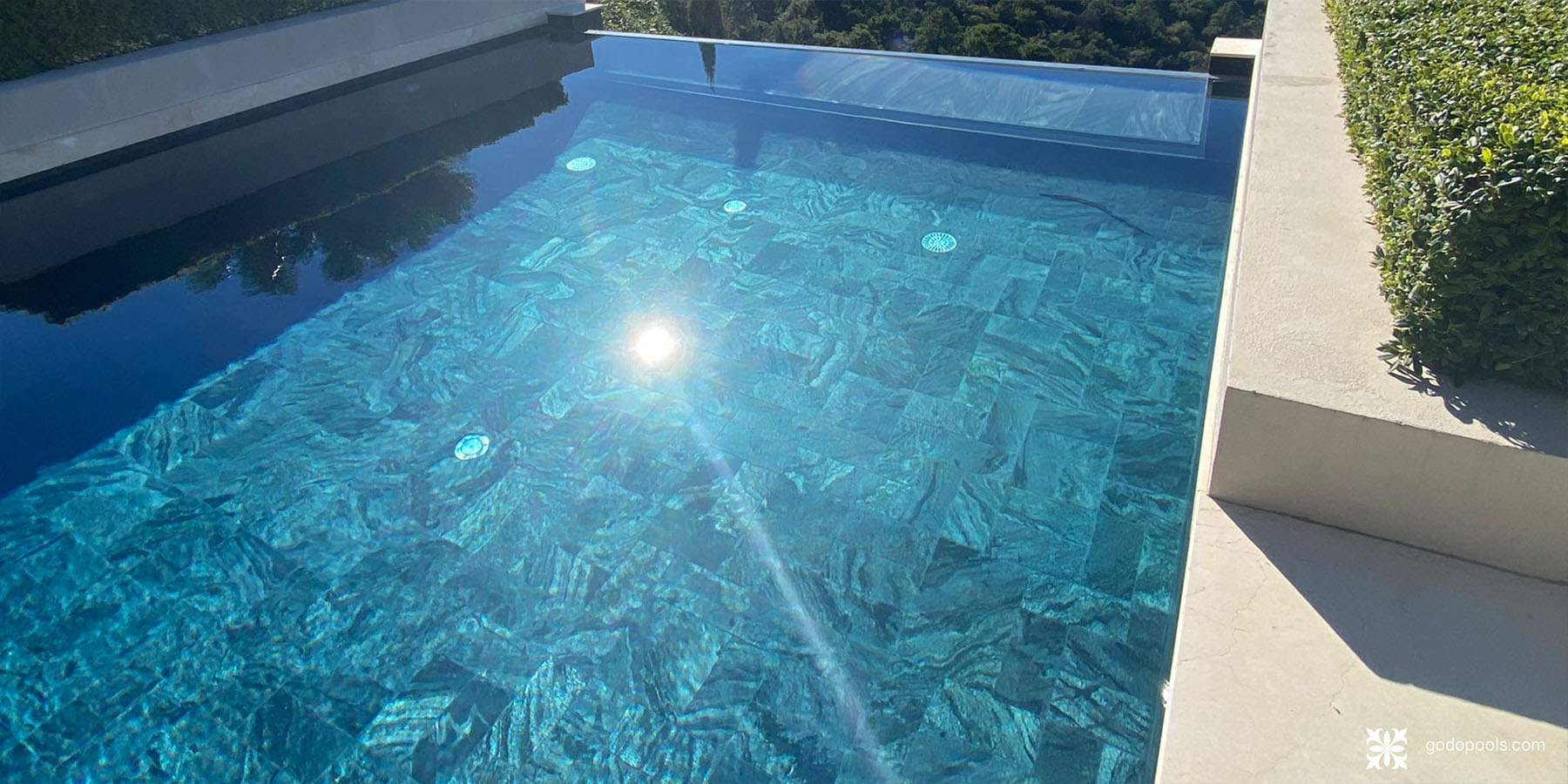
Unlike traditional skimmer pools*, where the water sits a few centimetres below the coping, an overflow pool keeps the waterline close to the level of the overflow edge, creating visual continuity with the architecture or the landscape.
The balance tank acts as a regulating element within the system. The system must have sufficient capacity to manage the volume displaced by bathers and the variations in level without compromising the operation of the overflow.
*Skimmer: a suction inlet in the wall that filters debris from the surface.
Reference and control levels of the tank
The design of a balance tank is usually defined around several reference levels, which may vary according to the design of the hydraulic system:
-
- Maximum operating level or reserve volume: receives the water displaced when bathers enter, together with rainwater on outdoor installations.
-
- Working level: the normal water volume during day-to-day operation. It allows the pump to receive a steady flow for continuous filtration.
-
- Minimum safety level: protects the pumping system against an insufficient water level, typically by means of sensors or automatic control systems.
Balance tank design and sizing principles
Correct sizing of the tank is essential to prevent water loss, energy waste or operational friction.
In preliminary stages, indicative ratios relative to the pool volume may be used, but the definitive sizing should not be established through a fixed percentage.
It should be calculated specifically according to the geometry of the overflow, the volume displaced by users, the hydraulic regime, the maintenance operations and the particular conditions of the installation.
To this end, a precise design requires evaluating several operational variables together:
| Balance tank calculation factor | Operational variable accounted for |
| Bather displacement | Volume displaced by users according to the anticipated occupancy and the conditions of use. |
| Overflow channel volume | Water actively travelling through the collection system during operation. |
| Maintenance operations | Water needs associated with the maintenance and cleaning of the filtration system. |
| Rainfall | Additional volume the system must be able to manage in outdoor installations. |
| Evaporation and operational losses | Water top-up needs to maintain the operating levels. |
Hydraulic integration, acoustics and efficiency
The balance tank forms part of a wider hydraulic system. Its correct sizing, together with the design of flow rates, overflow edges, pipework and pumping equipment, contributes to stable, efficient and acoustically controlled operation.
A correctly sized hydraulic design also makes it possible to optimise flow rates, pumping and climate-control strategies, aspects that are particularly relevant in heated pools and hydrotherapy circuits.
System control, materials and spatial planning
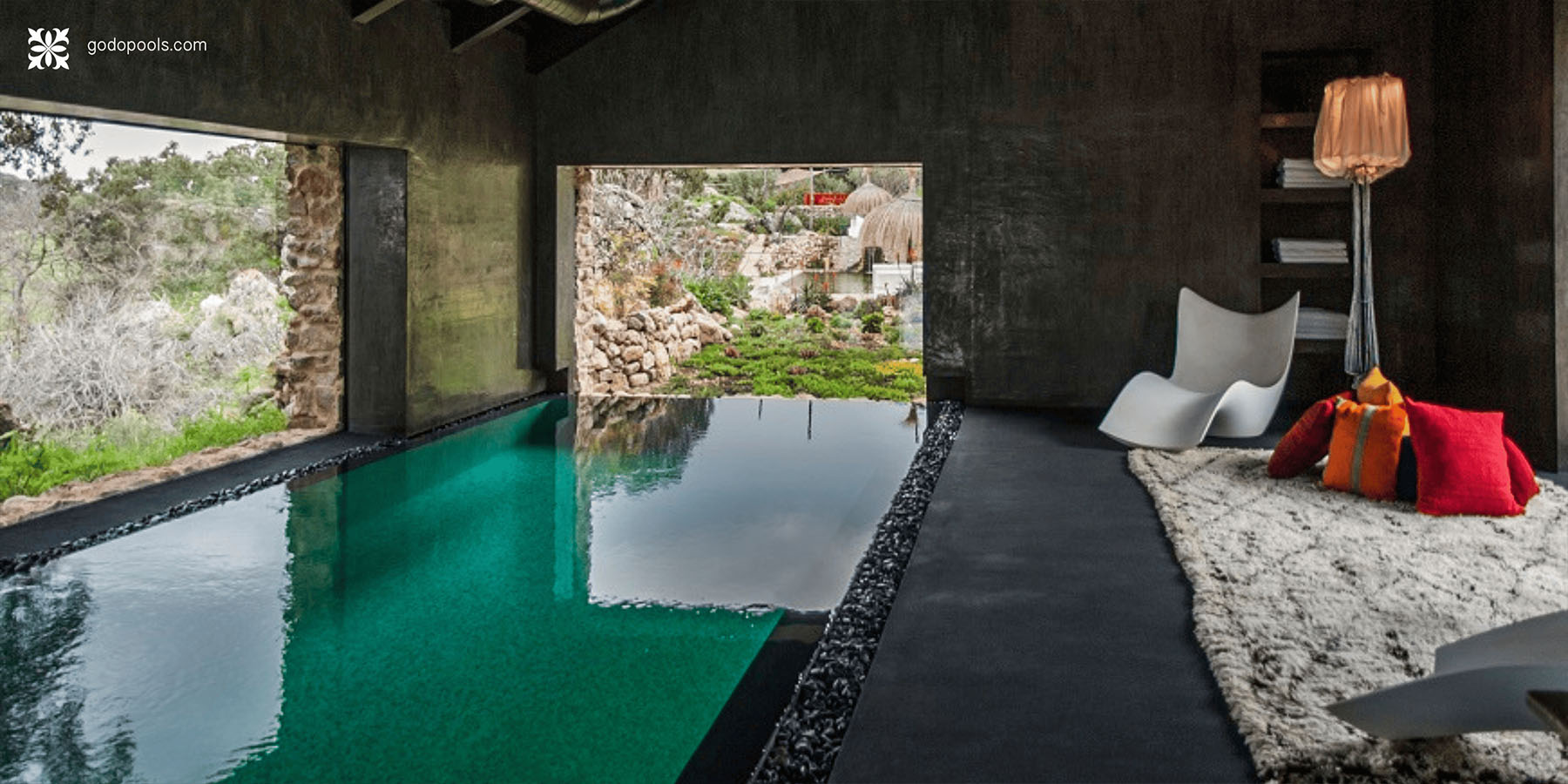
Current systems can incorporate automatic level control, water top-up, pump protection and the monitoring of various operating parameters.
As for its construction, the tank can be built as a correctly waterproofed reinforced-concrete structure alongside the pool, although prefabricated composite solutions can also be integrated where the site logistics or the technical room require it.
The location of the tank should be studied from the earliest stages of the project to reconcile architectural integration, technical accessibility and maintenance, providing convenient access for inspection, cleaning and sensor calibration.
Conclusion: engineering the architecture of water
As shown, a pool balance tank is far more than a simple storage vessel. It can be described as an essential piece within the hydraulic engineering of an overflow pool.
Accurate sizing of this system and correct hydraulic integration contribute to stable, efficient and reliable hydraulic operation over the long term.
Whether you are planning a private residence, a luxury hotel or an expansive wellness destination, our technical team at GodoPools can help define the water architecture and engineering from the earliest design stages.
Contact us here to define the hydraulic and technical strategy of your project from its earliest stages.

Frequently asked questions (FAQs)
➜ What is a swimming pool balance tank?
It is an element of the hydraulic system that collects the water coming from the overflow and makes it possible to manage the variations in volume produced during the operation and use of the pool.
➜ How big should a pool balance tank be?
There is no single percentage valid for every project. The volume should be calculated according to the overflow system, the geometry of the pool, the anticipated occupancy, the operating conditions and the maintenance needs.
➜ What is the difference between a balance tank and a surge tank?
The terms balance tank, surge tank or compensation tank may be used to refer to this element, although the terminology can vary according to the project or the market.
➜ Why does an overflow pool need a compensation system?
Because the water that passes over the edge must be collected, stored temporarily and reincorporated into the hydraulic circuit. The compensation system makes it possible to manage those variations in volume and maintain the operating conditions of the overflow.
➜ Where is a pool balance tank typically located?
Its location is defined according to the hydraulic scheme, the levels of the project, the gravity collection system and the access and maintenance needs. It should therefore be planned from the earliest design stages and coordinated with the architecture and the technical spaces.