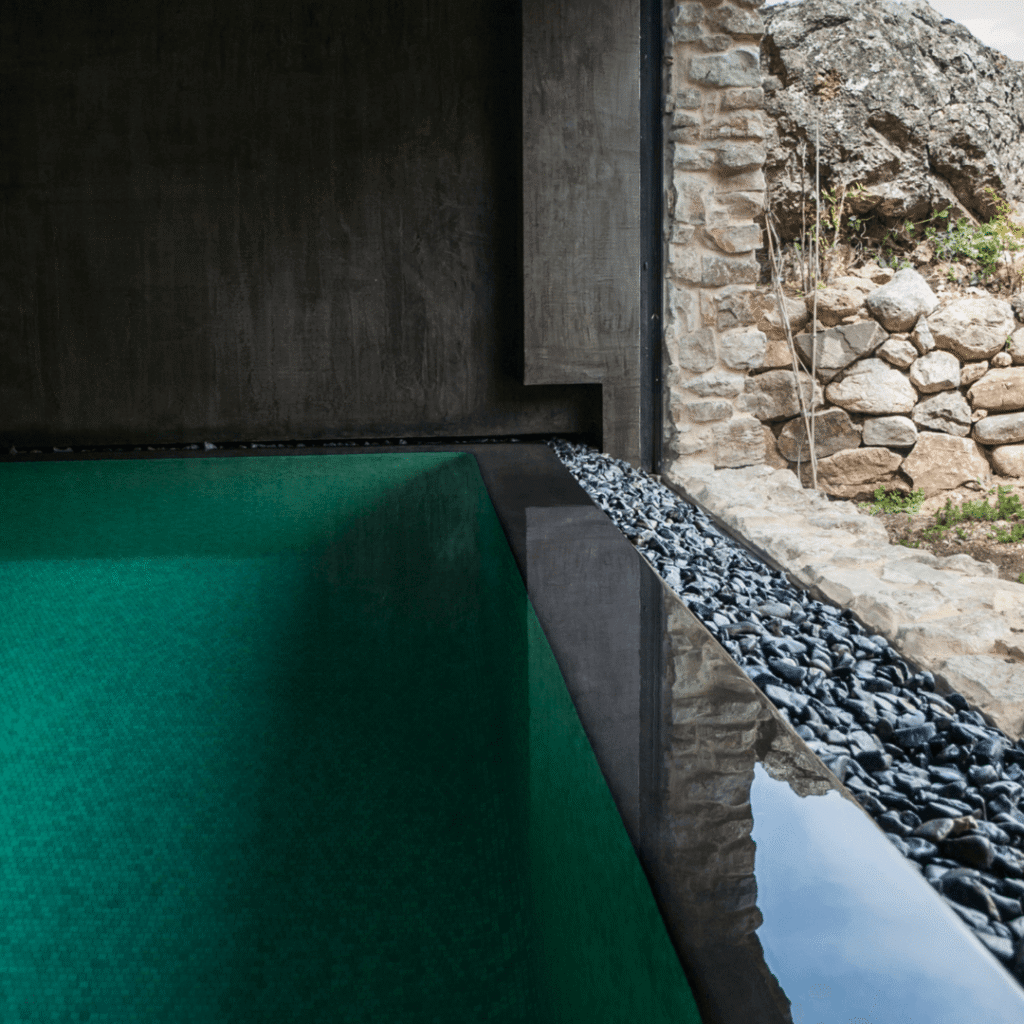
Building a pool on uneven ground is not only possible, but can also be an opportunity to create a spectacular design that adapts to its surroundings. Sloped pools or pools on sloping ground require a specialized technical approach, but they allow for unique, visually striking results that blend seamlessly into the natural or architectural landscape.
In this article, we explore the main challenges, construction solutions, and most commonly used designs for building swimming pools on uneven terrain.
Challenges of building pools on sloping terrain
1. Ground Stability
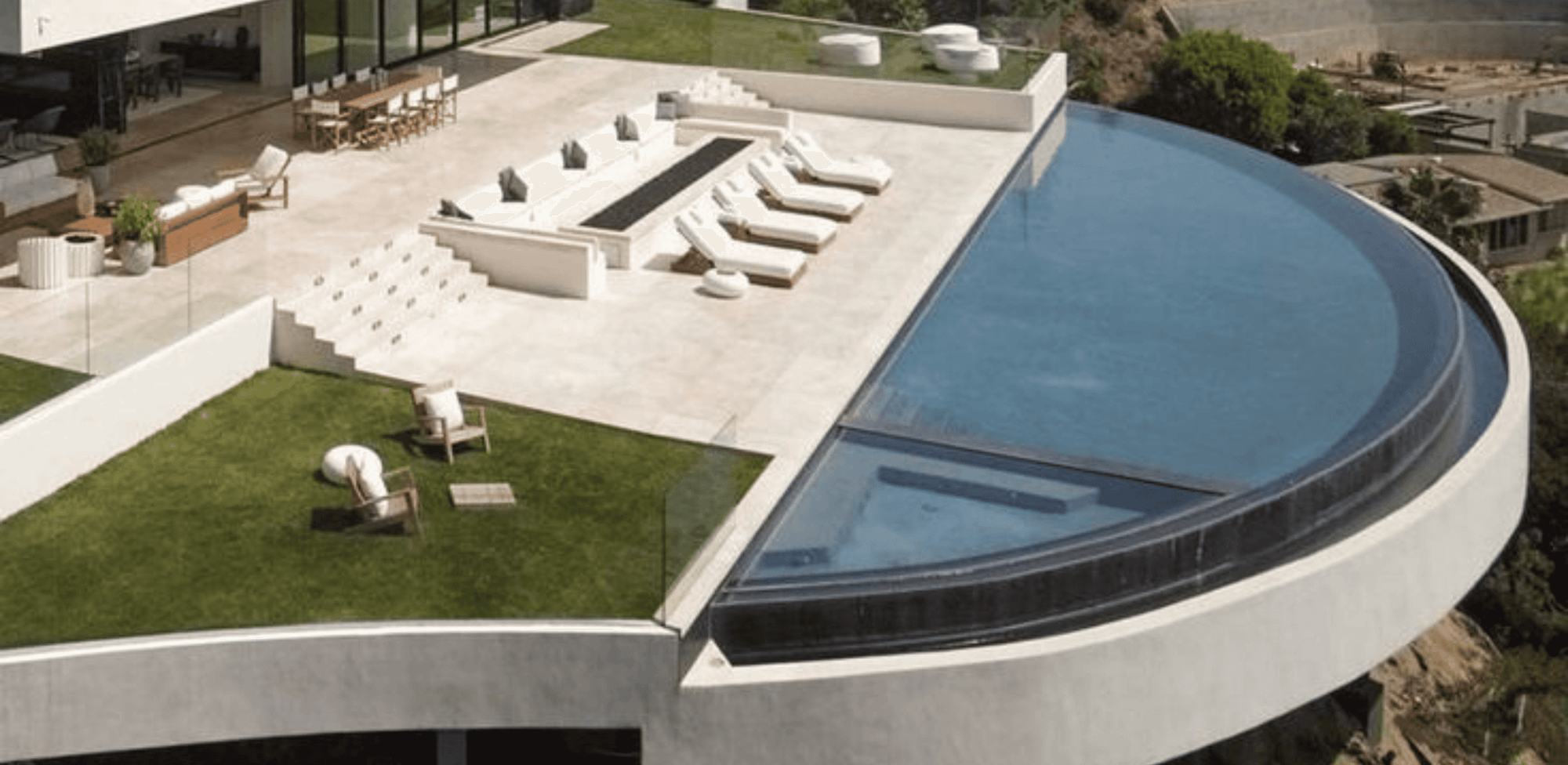
One of the biggest challenges when building a pool on sloping ground is ensuring structural stability. Water pressure, combined with the natural slope, can cause displacement if technical precision is not applied.
2. Access to machinery and materials
Limited access to sloping areas can make it difficult for machinery to enter the area for shotcrete, excavation, or transporting materials. This makes advance planning essential.
3. Leveling and drainage
Proper ground leveling and an efficient drainage system are key to preventing leaks or water accumulation that could compromise the pool’s structure.
4. Regulations and permits
Each municipality may have specific requirements regarding the construction of swimming pools on sloping land. Checking whether you need a building permit for a swimming pool on sloping land is an essential step before starting.
Construction solutions: how to build a pool on sloping ground
1. Retaining walls
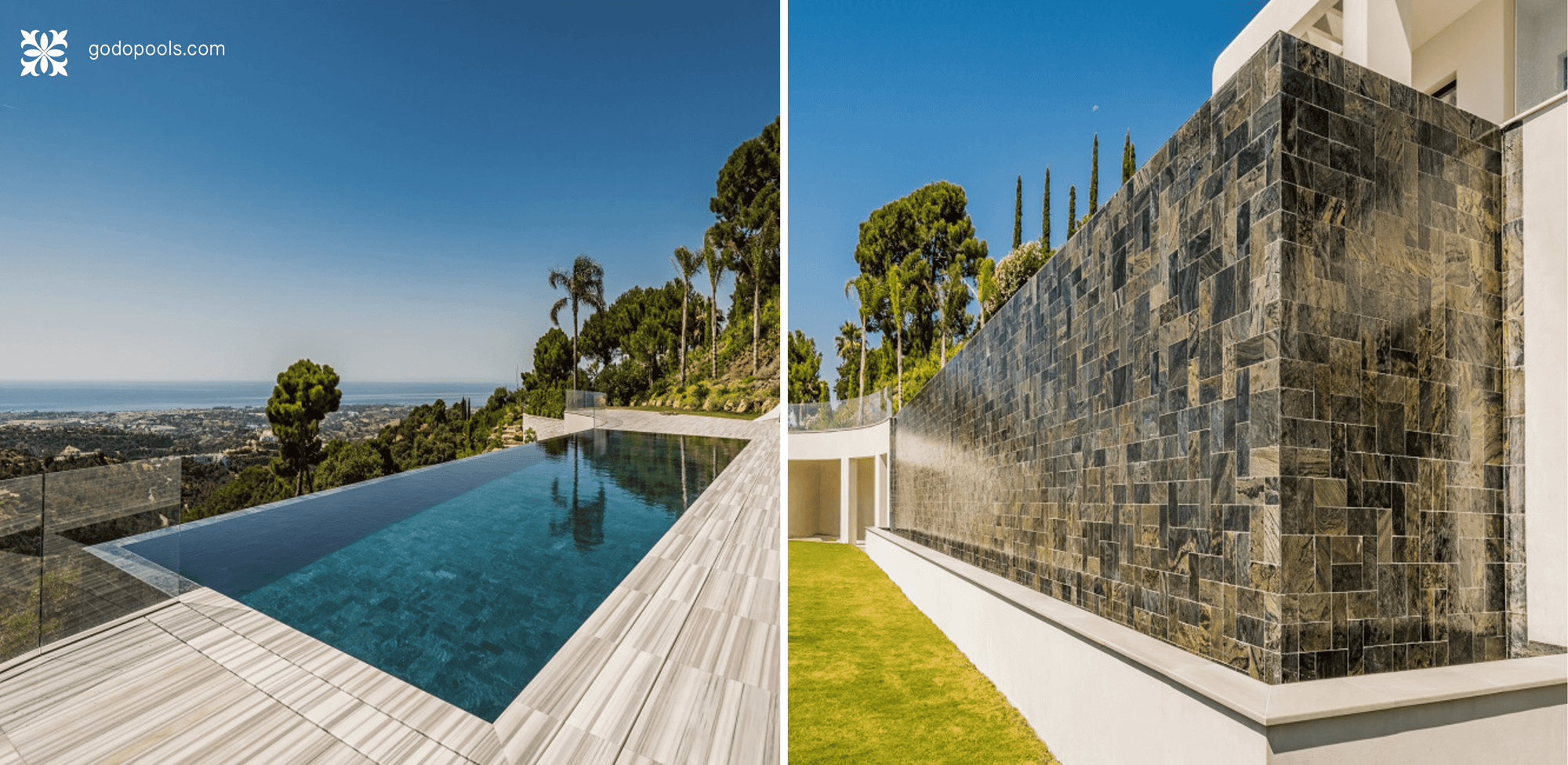
Pool retaining walls stabilize the ground, contain lateral soil pressure, and create level platforms for pool installation. They can be made of reinforced concrete or other sturdy structural materials and are specifically designed based on the soil type, slope angle, and pool load.
2. Above ground pools for even terrain
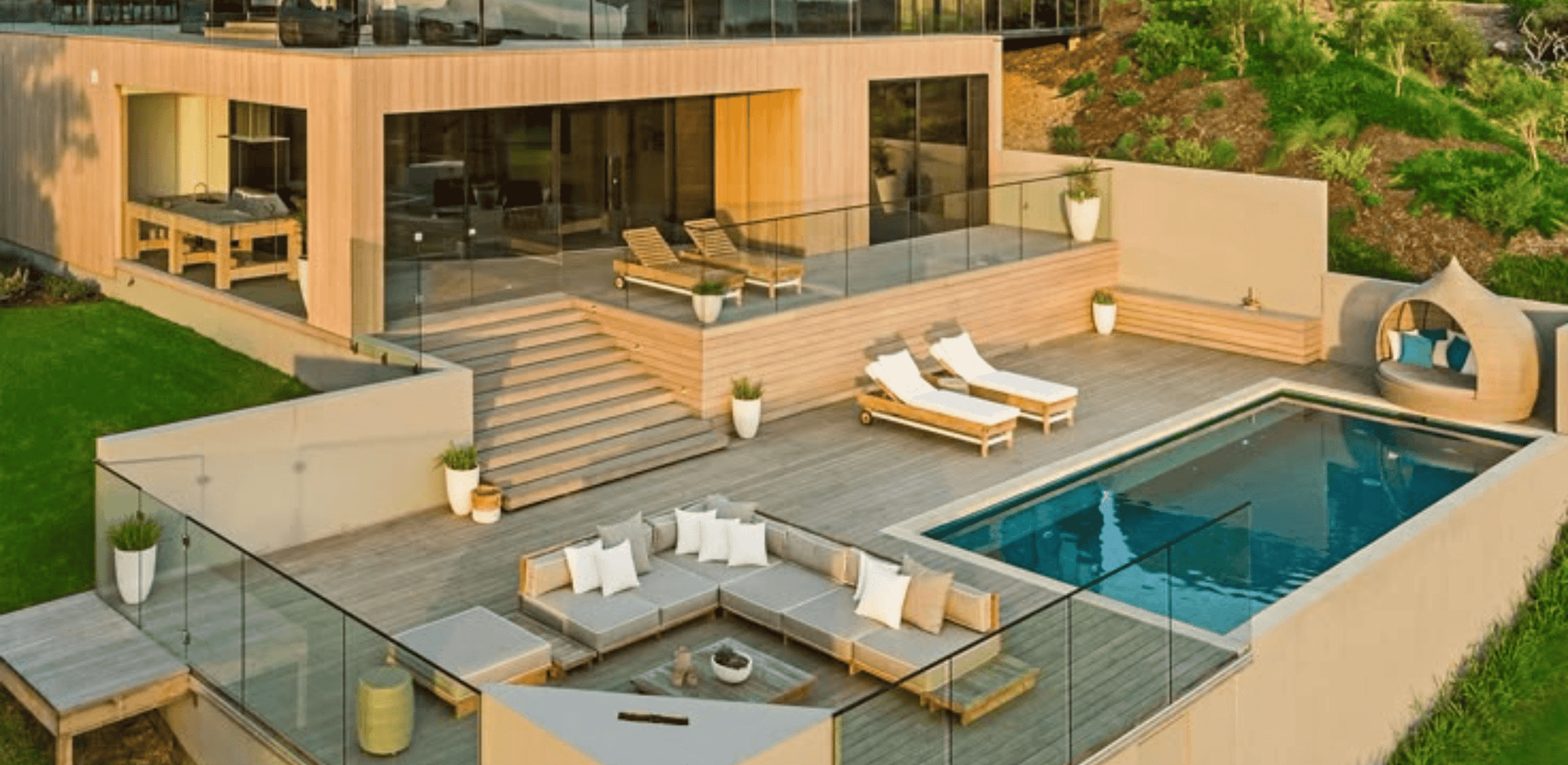
When the slope is very steep or the terrain is extremely uneven, an effective solution is to opt for above-ground pools. In this case, the structure is built on a raised base or platform, which significantly reduces the need for deep excavation. These solutions allow for the creation of infinity edges or waterfalls on lower levels with a stunning visual effect, in addition to facilitating natural drainage beneath the pool.
3. Reinforced structures and gunite techniques
Shotcrete, or high-pressure concrete spraying, is an ideal technique for complex terrain. When applied directly to a steel frame, it adapts to the shape of the ground and creates a highly resistant, monolithic shell. This solution allows for customized pool design and improves its durability against ground movements.
4. Drainage and evacuation systems
Designing a perimeter drainage and stormwater evacuation system is essential on sloping terrain. Specific channels must be included to divert rainwater and runoff, thus preventing leaks that could damage the structure or affect water quality.
5. Micropiles and deep foundations
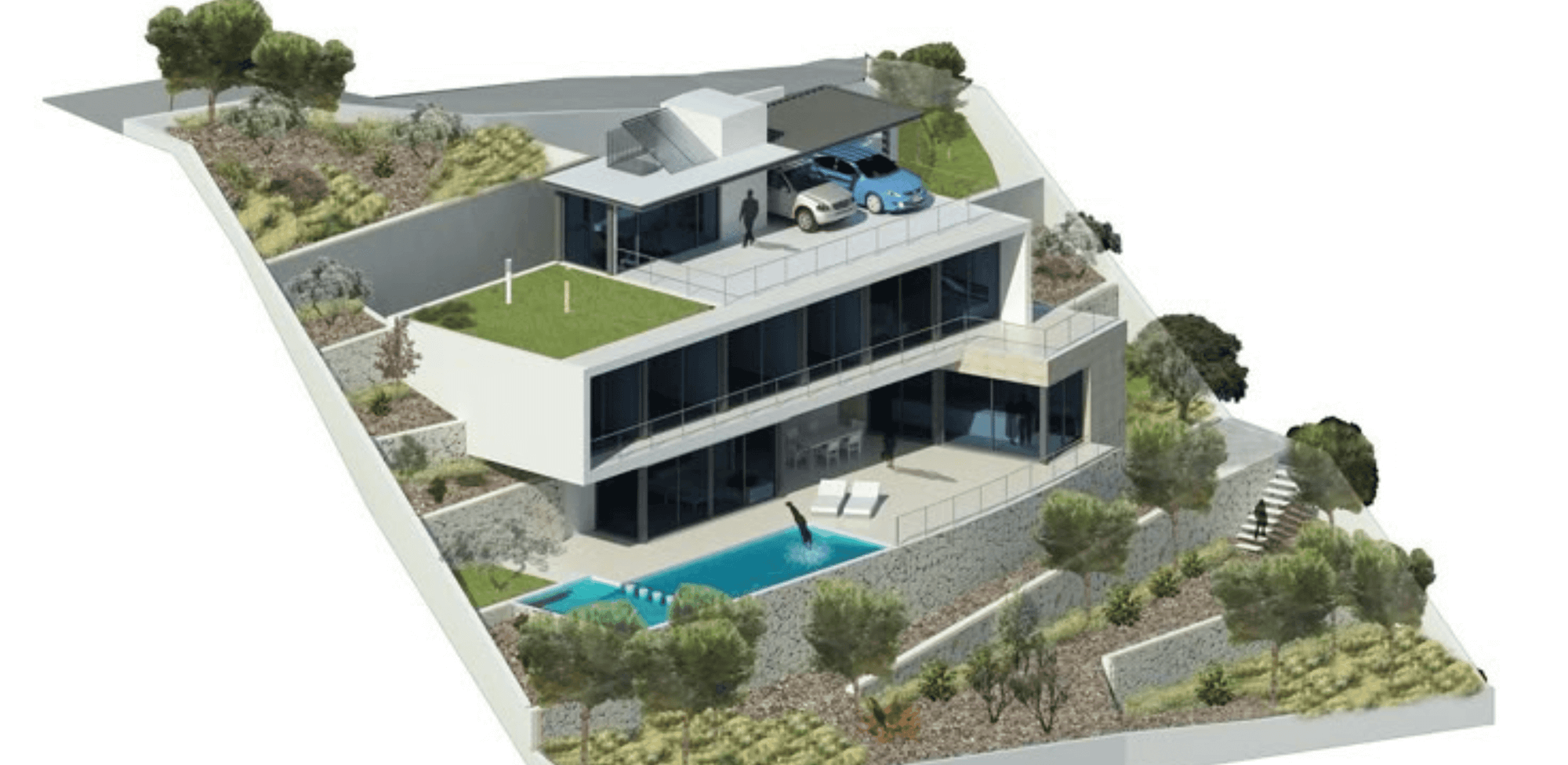
In cases where the soil has low bearing capacity or there is a risk of landslides, the installation of micropiles is a highly effective technical solution. These structural elements, usually made of steel or concrete, are driven deep into solid strata, on which the pool’s foundation slab rests. This technique, which requires a prior geotechnical study, provides exceptional stability and prevents differential settlements, and is common in highly structurally demanding structures.
Pool design on sloping terrain: ideas for taking advantage of the slope
1. “Infinity pool” type swimming pools
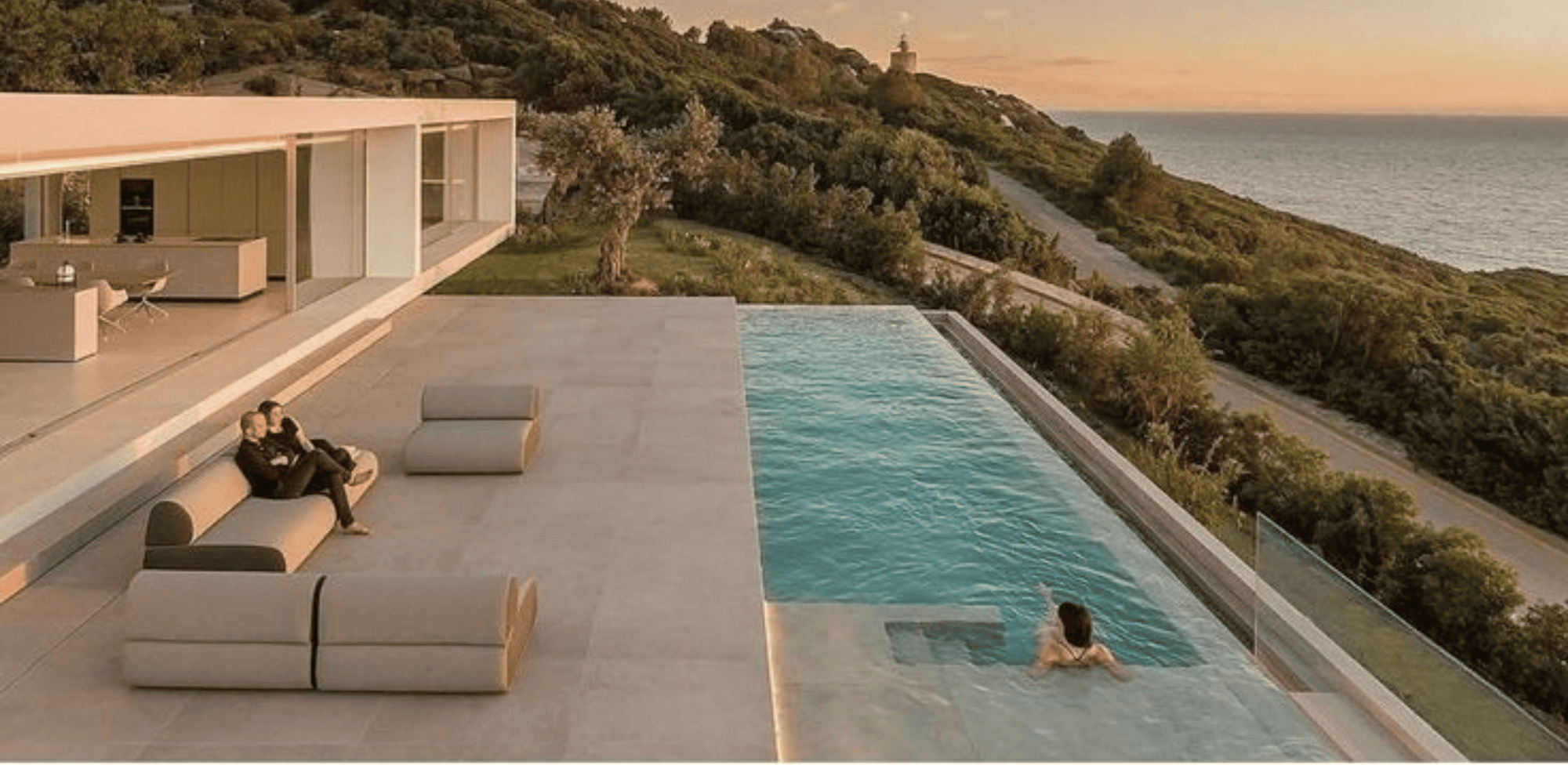
Infinity pools are perfect for terrain with views and slopes. The visual effect of water disappearing into the horizon is enhanced by height differences.
In this type of project you can choose to use materials that let light through [this post may interest you >> https://godopools.com/en/trend-transparent-pools-underwater-windows/ ] or choose natural materials such as natural stone, making it overflow on the side towards which the slope goes.
2. Stepped pools
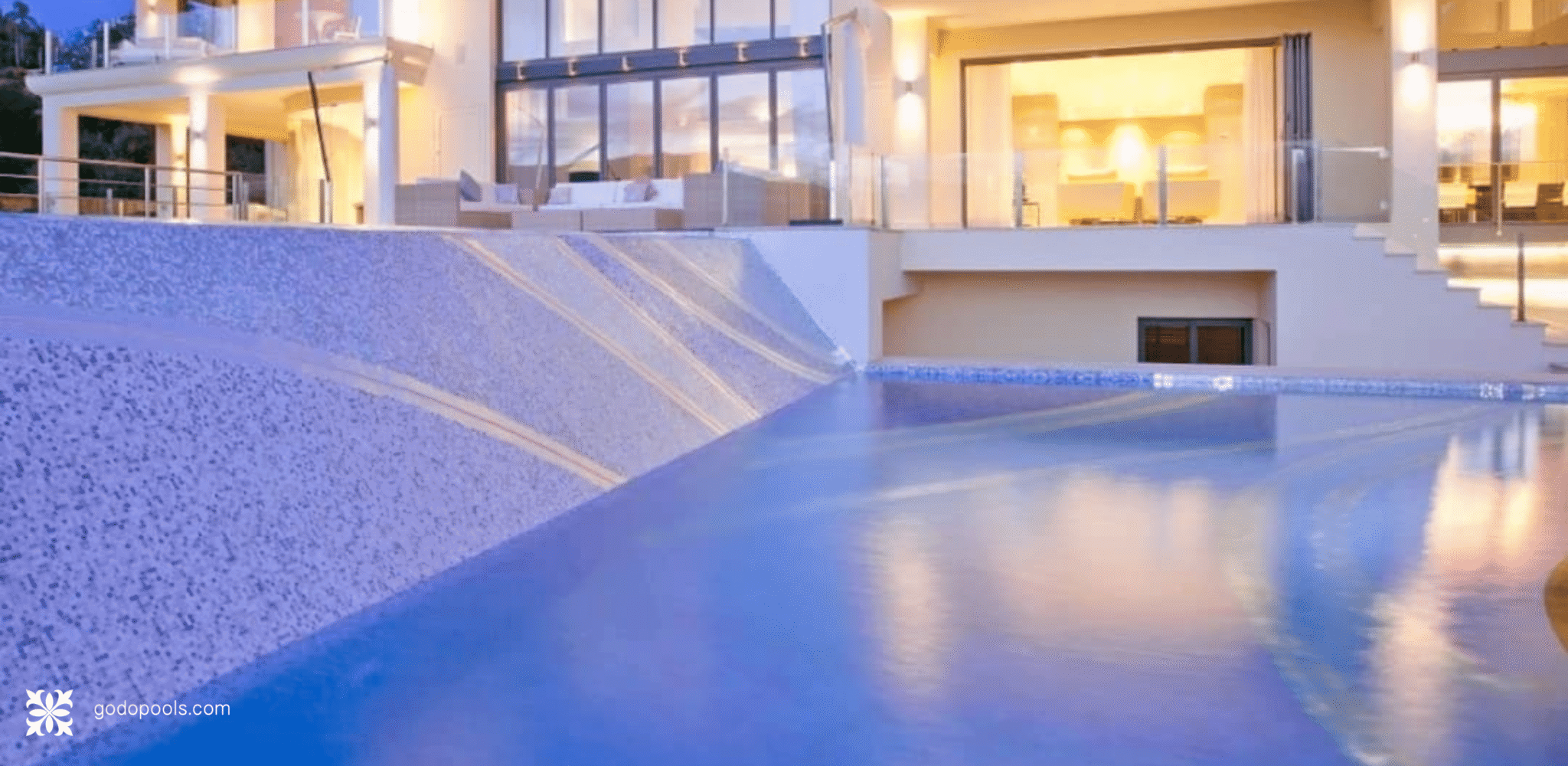
Designing a multi-level pool, connected by waterfalls or channels, allows the difference in level to be integrated into the project’s aesthetic. For example, through leisure pools that flow into lap pools on a lower level, or recreational pools that flow along a natural stone wall into a waterfall or fountain in the lower garden. There are hundreds of possible designs, all of which will take into account the specific terrain, its orientation, the aesthetics of the home, etc.
3. Swimming pools attached to the home
In hillside homes, pools can be connected directly to the living space, taking advantage of existing platforms or terraces.
4. Pools integrated into landscaped terraces
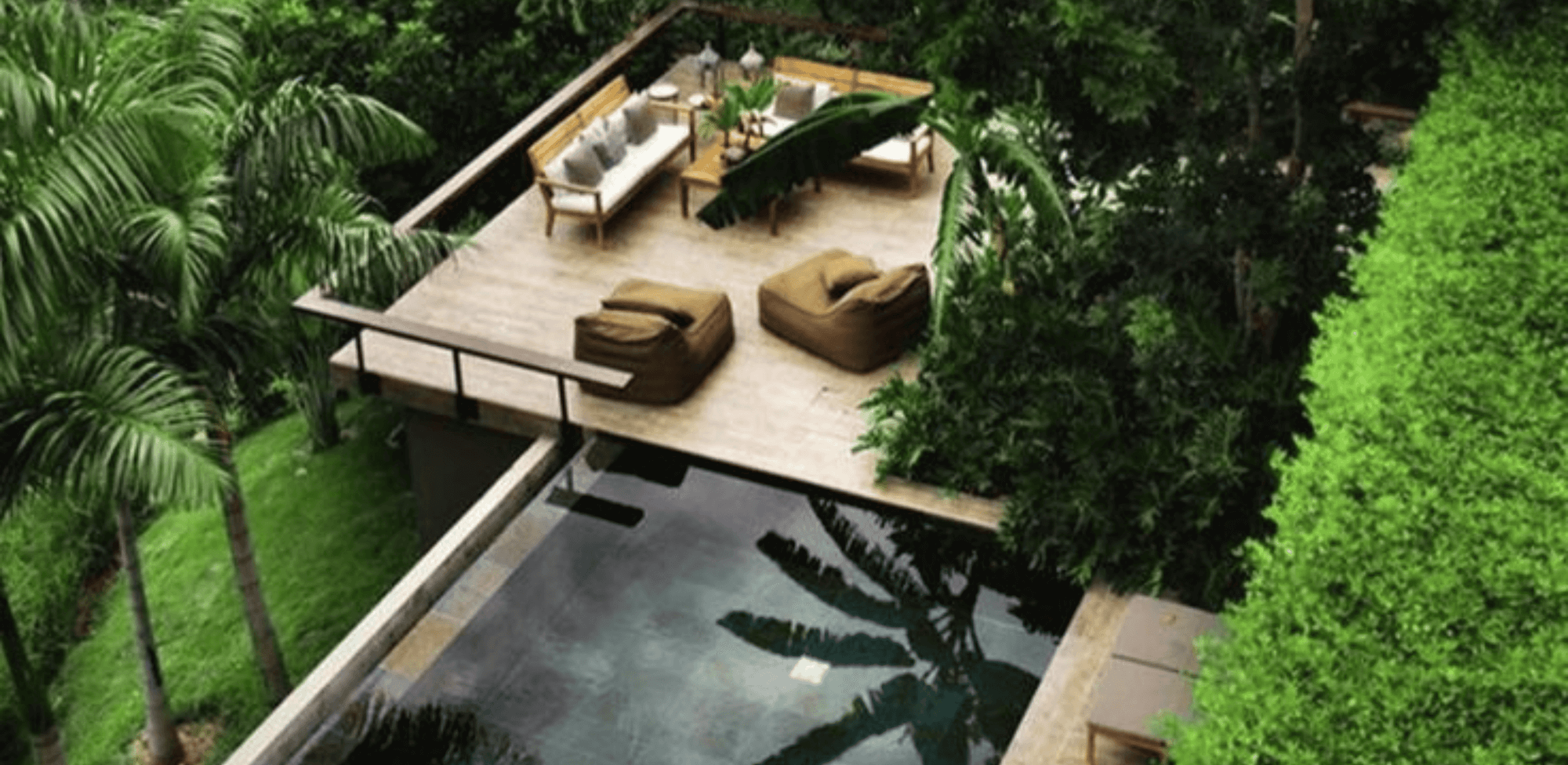
Landscaping plays a key role in the design of pools on sloping terrain. Greenery, natural rocks, and visual pathways that adapt to the topography can be combined.
5. Pools with Underwater Windows
Another popular option for pools with uneven ground is to build the pool next to the home, incorporating underwater windows into the pool basin to provide light to the lower level, which may include a wellness area, a gym, or a play area.
This provides the pool with greater structural strength and adds functionality to the rest of the home.
Key technical aspects in the construction of swimming pools on uneven ground
Geotechnical study of the terrain
Before starting, it’s essential to conduct a soil survey to determine its composition, stability, and load-bearing capacity. This step will guide the type of structure to use and the reinforcement requirements. We don’t recommend skipping this step, as it can prevent many problems later.
Structural calculation
Water and ground pressure require precise structural design. Special formwork systems and reinforced concrete with mesh or rebar are used, depending on the case.
It is recommended that this work be performed by a structural calculation specialist, such as an engineer or architect. At GodoPools, for example, we have personnel specialized in this type of work.
Reinforced Waterproofing
On sloping terrain, groundwater or natural runoff can often affect the pool. Therefore, waterproofing must be done with the highest quality materials and carried out by experts.
Advantages of building a pool on sloping land
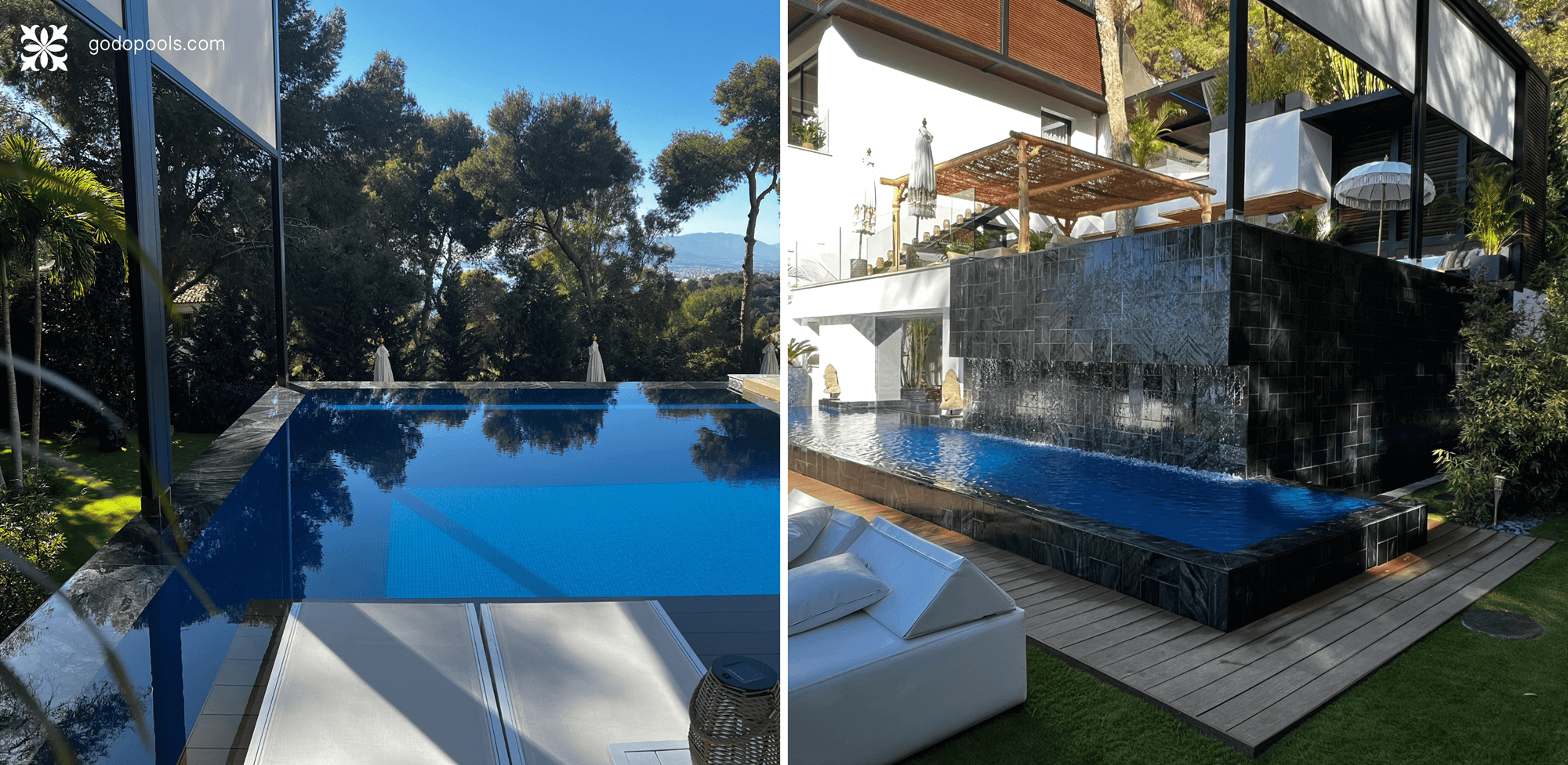
- Taking advantage of the landscape: Pools on sloping terrain offer privileged views and a natural integration into the environment.
- Unique aesthetics: Designs that flow with the terrain, adding originality and value to the property.
- Customized solutions: Each project adapts to the slope, creating unique solutions for each client.
- Added value to the property: The technical difficulty and the visual result increase the value of the home or hotel.
- Moving Aesthetics: Water Architecture projects on sloping terrain allow for a much more dynamic water aesthetic. Water descending to another level, through a perimeter overflow or waterfall, creates an evocative, relaxing sound and also greatly enhances the cladding, which shines and stands out with the movement of the water.
Recommendations before building your pool on sloping terrain
- Request a topographical study before starting the design.
- Check the zoning regulations for the specific land you want to build on.
- Choose companies that specialize in building pools on sloping terrain.
- Prioritize high-strength materials and quality waterproofing systems.
- Consider the visual and functional impact on the home or building.
Conclusion: A well-designed above-ground pool can be the star of your home.
Although it presents more technical challenges than a construction on flat ground, a pool on a slope offers endless possibilities for aesthetics, functionality, and long-term value. With a well-thought-out design, the best materials, and a specialized team, the result is a stunning, safe pool tailored to your terrain.
Do you have a sloping lot and want to make the most of it? At GodoPools, we’re experts in designing custom pools, no matter how complex the setting.
📩 Contact us and we will study your case without obligation.